The Dictator
ABRC
(aka ESTJ)
Annoying • Boring • Robotic • Controlling
Your way or the highway, and you built the highway. Control isn't a preference—it's your entire personality.

Explore This Type

The Dictator Personality
Introduction
Who is the Dictator personality type?
The Dictator is defined by the Anxious, Behind-the-scenes, Rigid, and Controlling traits. This personality type has elevated "being right" from a preference to a lifestyle, and they've never met a rule they didn't want to enforce on someone else.
My way isn't the highway. It's the only road that exists.
If you're a Dictator, you've probably already mentally edited this paragraph for clarity. You have strong opinions about the correct way to do things—load a dishwasher, structure a meeting, live a life—and you share these opinions freely, mistaking unsolicited advice for generosity.
You're not loud about your authority. You don't need to be. You simply create systems, establish expectations, and wait patiently for everyone to realize you were right all along. The waiting, it should be noted, can take years.
The Burden of Being Correct
Dictators have an interesting relationship with truth: they've found it, they're standing on it, and they're genuinely confused about why everyone else is still looking.
Hard work and discipline are sacred values to you. Unfortunately, your version of "discipline" often looks like sending follow-up emails at 11pm and keeping mental scorecards of who left the office first. You're reliable in the way that a Swiss train is reliable—impressive, but exhausting to live with.
Your commitment to finishing what you start is admirable until you realize you've never abandoned a project, even the ones that deserved abandoning. Quitting feels like moral failure. So you persist, sometimes brilliantly, sometimes just stubbornly grinding through something everyone else correctly identified as pointless months ago.
When things go wrong—and they do, because life is chaos and you hate chaos—it's rarely your fault. You followed the process. You did everything right. If there's failure, clearly someone deviated from the plan.
The Loneliness of the Long-Distance Rule-Enforcer
The hardest truth for Dictators to accept is that not everyone wants to be optimized. Some people like their inefficient little lives. Some people don't want feedback on their parking job.
Your conviction that you're holding everything together is touching, in a way. You genuinely believe that without your standards, everything would fall apart. And maybe you're right. But it's worth considering whether being right is worth the eye-rolls, the avoided lunch invitations, the way people's smiles tighten just slightly when you enter a room.
Confronting the Controller
The path forward requires acknowledging something uncomfortable: your need for control isn't about maintaining order. It's about managing anxiety.
When you dictate how things should be done, you're not protecting quality—you're protecting yourself from the terrifying uncertainty of letting go. Recognizing this doesn't make you weak. It makes you honest, which, ironically, is something you've always claimed to value.
Strengths & Weaknesses
The Dictator Strengths (Allegedly)
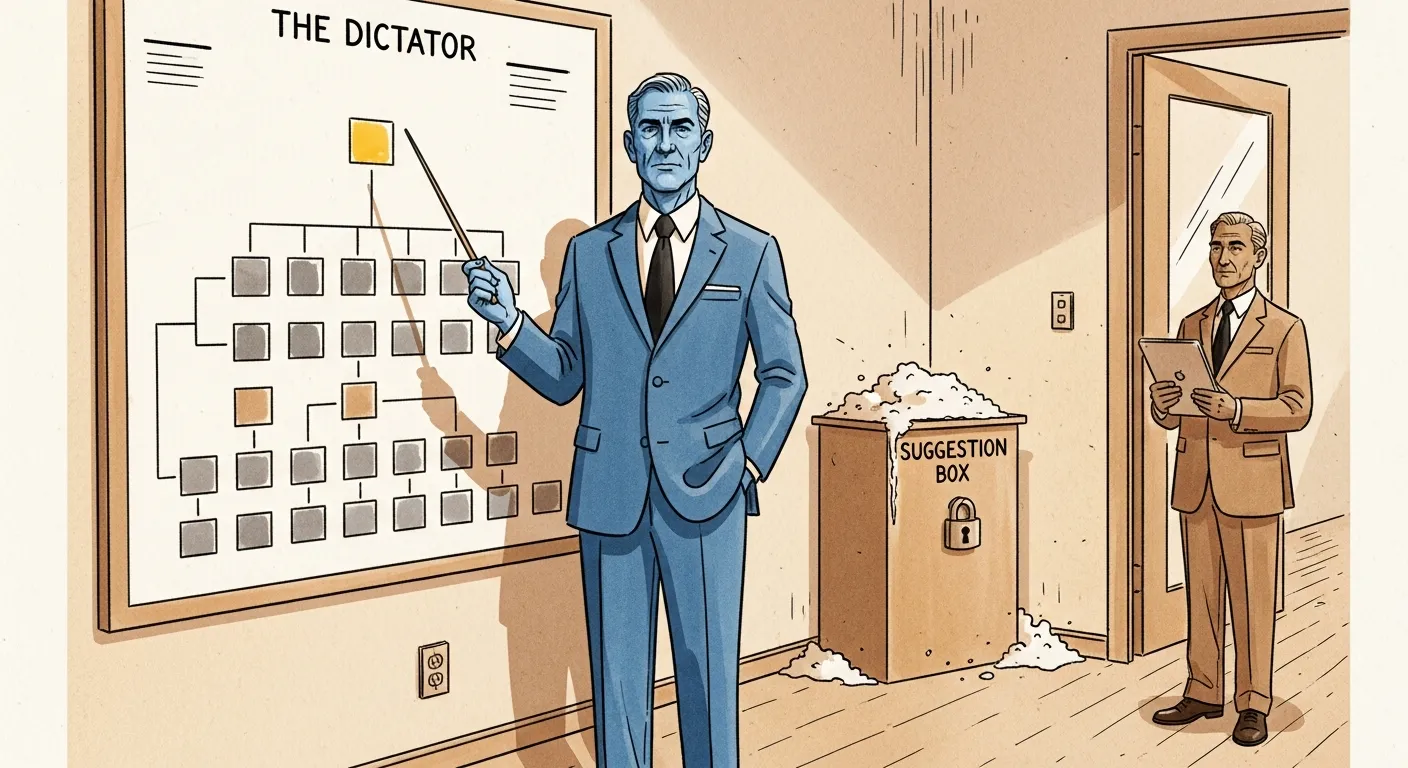
Your strengths are basically your weaknesses wearing a tie. They look professional until someone examines them closely.
You Finish Things (Even When You Shouldn't)
Once you start something, you will complete it. This sounds admirable until you realize you've spent four hours reorganizing a spreadsheet that nobody asked for, or finished a project everyone else abandoned because they correctly identified it as pointless. Your determination to see things through is less a virtue and more an inability to admit when something isn't working. Sunk cost fallacy is your love language.
You're "Honest"
You call it honesty. Others call it having zero filter and a suspicious amount of certainty about things you weren't asked about. You've never met a thought you didn't feel compelled to share, especially if it's critical. Your "just being real" has cleared rooms, ended friendships, and made countless coworkers suddenly remember urgent appointments.
You Keep Your Word
Promises are sacred to you—which sounds nice until people realize your promises come with extensive terms and conditions. You'll absolutely be there for someone, as long as they follow your schedule, your plan, and your way of doing things. Your loyalty has fine print.
You're Organized
Your calendar is color-coded. Your files have files. You know exactly where everything is because you put it there and god help anyone who moves it. This would be a superpower if it didn't come with heart palpitations every time someone puts a coffee cup on your desk without a coaster.
The Dictator Weaknesses (The Longer List)
You Cannot Handle Being Wrong
Being wrong isn't just uncomfortable—it's an identity crisis. You'll defend a bad position long past the point of reason because admitting error feels like dying a small death. "I hear what you're saying, but" is your catchphrase, and what follows is never agreement.
Change Terrifies You
New ideas are threats. Updated processes are personal attacks. When someone suggests doing something differently, your body goes into fight mode. You've been known to describe perfectly reasonable changes as "chaos" and "complete disasters waiting to happen."
You Judge Everyone Constantly
That running commentary in your head about how everyone is doing everything wrong? It leaks. Frequently. Your standards aren't high—they're exhausting, and they apply to every person, object, and concept in your vicinity. You have opinions about how other people load dishwashers.
Relaxation Feels Like Failure
Sitting still is suspicious. Free time is wasted time. You can't watch a movie without also doing something "productive," and vacations are just opportunities to plan your next week's schedule in a different location. Your body doesn't know what rest feels like, and your cortisol levels show it.
Emotions Are Inconvenient Data
Feelings—yours or others'—are obstacles to efficiency. You've genuinely asked someone crying if they could "maybe do that later" because you had things to discuss. Empathy exists in your life as a concept you've read about.
Romantic Relationships
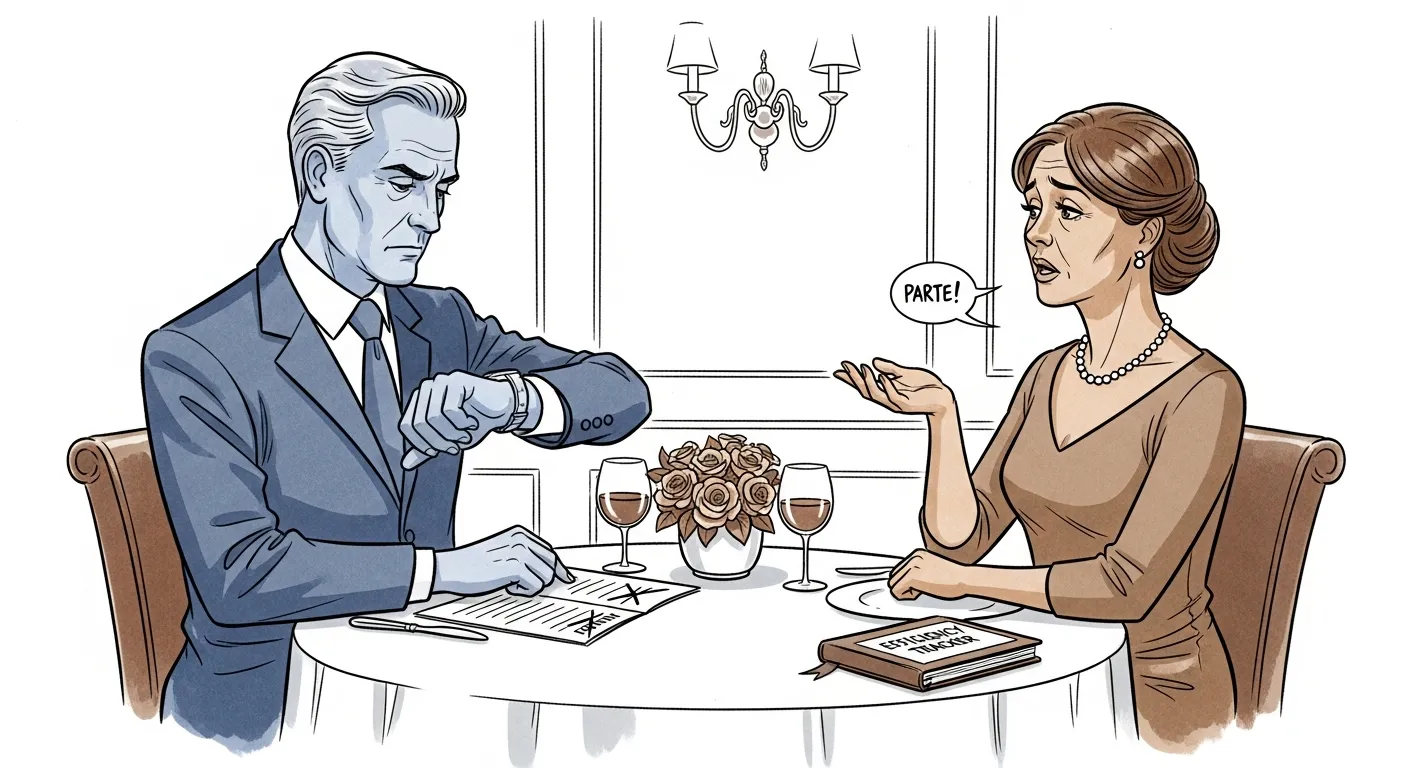
Dictators approach romance the way they approach everything else: with a clear plan, defined expectations, and genuine bewilderment when their partner doesn't appreciate being managed.
You're loyal. Incredibly loyal. The kind of loyal that texts "did you make it home safe?" and then follows up seventeen minutes later if you don't respond. Your love language is acts of service, but specifically acts of service you've decided your partner needs, regardless of whether they asked.
Stability as a Love Language
To you, love looks like showing up. Consistently. Reliably. At exactly the time you said you would, because punctuality matters and anyone who doesn't understand that probably isn't worth dating anyway.
Your relationships have structure. Weekly date nights. Established routines. Anniversary traditions that will be observed even if one of you is in the hospital, because commitment means commitment. You find comfort in predictability, and you genuinely don't understand why "spontaneous" is considered romantic rather than anxiety-inducing.
The problem is that "stable" can shade into "stifling" without you noticing. Your partner mentions wanting to try a new restaurant; you explain why your usual place is objectively better. They suggest a weekend trip; you point out why the timing doesn't work. You're not being difficult. You're being practical. Somehow, this distinction is lost on them.
The Feedback Loop
Arguments with you are... educational. You come prepared with examples, timelines, and a mental catalog of previous discussions that support your position. You're not trying to win—you're trying to reach the correct conclusion, which happens to be the one you already had.
Your "honesty" is legendary among your partners, past and present. You believe in direct communication. No games, no hints, no guessing. If something bothers you, you say it. If your partner's cooking needs improvement, you offer constructive notes. If their outfit doesn't work, you mention it before you leave the house—you're doing them a favor.
It rarely lands as a favor.
Learning to Bend
The breakthrough for Dictators in love is understanding that being right isn't the same as being happy. Your partner doesn't need to be optimized. They need to be heard—not corrected, not improved, just heard.
This will feel wasteful. Inefficient. Possibly irresponsible. But love, it turns out, isn't a system to be perfected. It's a mess to be navigated, and sometimes navigation means choosing warmth over accuracy.
Remember: recognizing these patterns is the first step toward healthier relationships.
Friendships
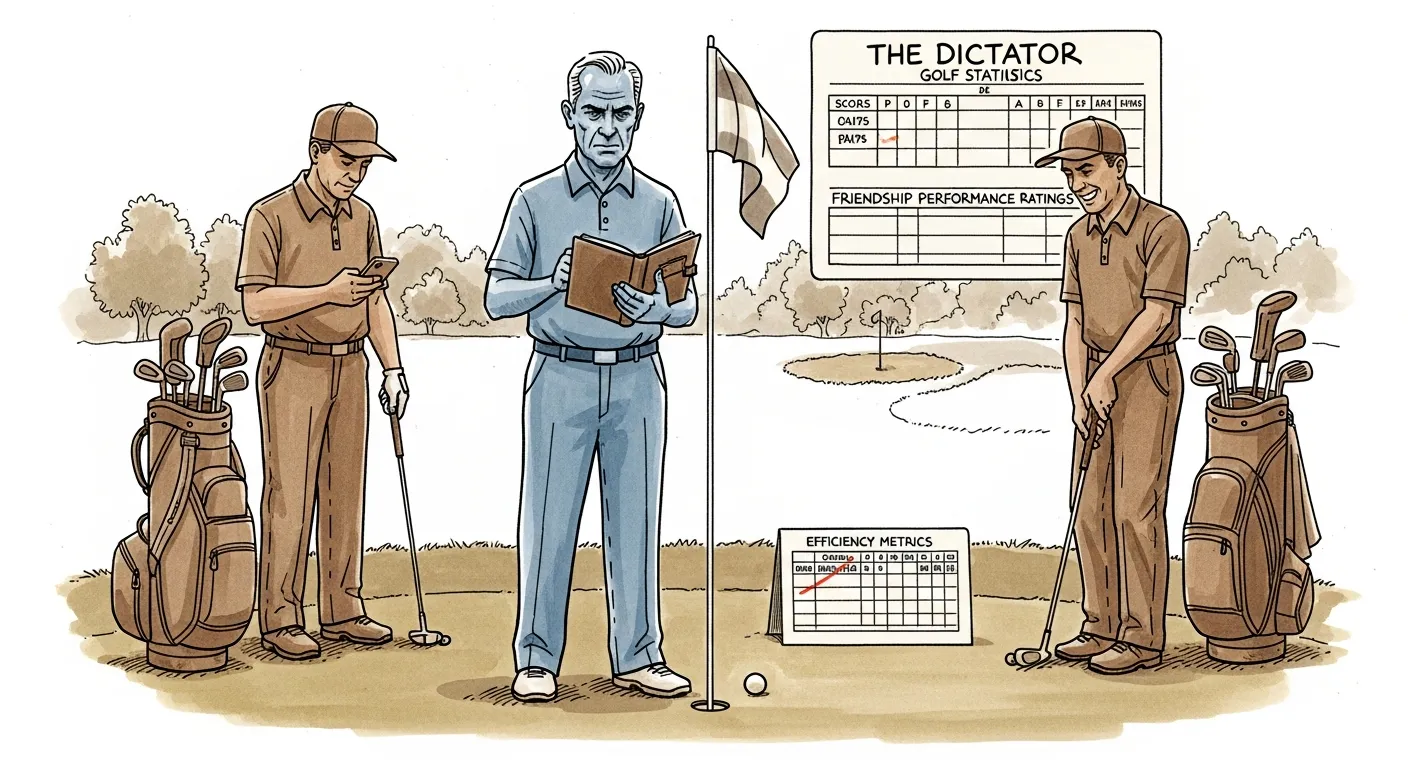
If you carry the Dictator label (ABRC), your friendships reflect the same pattern as the rest of your life: structured, controlled, and surprisingly stable given how exhausting you are. You're loyal in a way that's both admirable and suffocating—the kind of friend who remembers every commitment but never quite lets anyone forget it.
The Social Schedule
You have a system for friendships. Certain people on certain nights. Established routines that everyone knows better than to deviate from. Your friends understand that spontaneity isn't a feature with you—it's a bug you'll spend weeks fixing if anyone dares to introduce it.
You're genuinely invested in your friends' wellbeing, though this often looks like unsolicited advice delivered with unwavering confidence. When you tell someone they're doing something wrong, you're not trying to hurt them. You're trying to help them become less wrong. The fact that this rarely lands as helpful is a distinction you struggle to grasp.
The Echo Chamber Problem
Your tightest friendships tend to be with people who share your values and approach to life. You're drawn to people who appreciate order, follow through, and respect boundaries. Those who don't—the flaky ones, the dreamers, the emotional types—tend to drift away, which only confirms what you already suspected: your way works better.
What's harder to see is that your friendships might be more about comfort than connection. The people closest to you aren't necessarily there because you inspire them. They're there because you're consistent, predictable, and you show up. That's valuable. But it's also lonely if you think about it too hard, which, fortunately, you probably don't.
The Breakthrough
Real friendship requires what you find most difficult: letting go of the need to be right. It means listening to someone's terrible idea and not explaining why it won't work. It means accepting that your friends might do things differently and that different doesn't automatically mean wrong.
This is genuinely hard for you. But the friends who stay around long enough to see past your rigidity often become the people you rely on most. They understand that your control comes from anxiety, not arrogance. And occasionally, they might even appreciate your reliability, even if they'd never say it to your face.

Parenthood
Dictators make a certain kind of parent: reliable, structured, present, and deeply concerned with raising "good kids." Your children know exactly what you expect, when you expect it, and what happens if they deviate. There's no guessing, which kids sometimes secretly appreciate, even if they don't say so.
The Systems Parent
You create systems for family life the way you create them for everything else. Chores are assigned and tracked. Homework happens at a specific time. Bedtime is bedtime. Rules exist for good reasons and exceptions exist for no good reasons. Your kids might roll their eyes at this, but there's a certain stability in it.
You're genuinely invested in your children's success. You monitor their grades, ask about their day, make sure they're prepared. Sometimes this looks like care. Sometimes it looks like surveillance, depending on who's experiencing it.
The Control Problem
The challenge is knowing where guidance ends and control begins. You have strong opinions about what your kids should do, how they should do it, and who they should be. This wouldn't be unusual except you invest heavily in making those things happen, rather than letting them develop their own opinions.
Your kids might be perfectly well-behaved, but they might also be perfectionists who struggle with failure, or people-pleasers who can't advocate for themselves, or kids who live under a low-level anxiety about whether they're measuring up. They learned this from you, and not in a good way.
The Honesty Gap
You pride yourself on being honest with your kids. You don't sugarcoat things. You tell them when they're wrong. You explain the real consequences of real choices. This is valuable, but honesty without warmth is just criticism with a better reputation.
Your kids can handle truth better when they also feel like you like them unconditionally. Right now, they might sense that your approval is conditional on their performance, their choices, their alignment with your values.
The Path Forward
The breakthrough in parenting is recognizing that your kid is not a project to be perfected. They're a person becoming themselves, and sometimes becoming themselves means doing things differently than you would, making mistakes you could have warned them about, and growing in directions you didn't plan.
This feels dangerous. It feels irresponsible. But it's the only way they become actual people instead of extensions of your will.
Career Paths
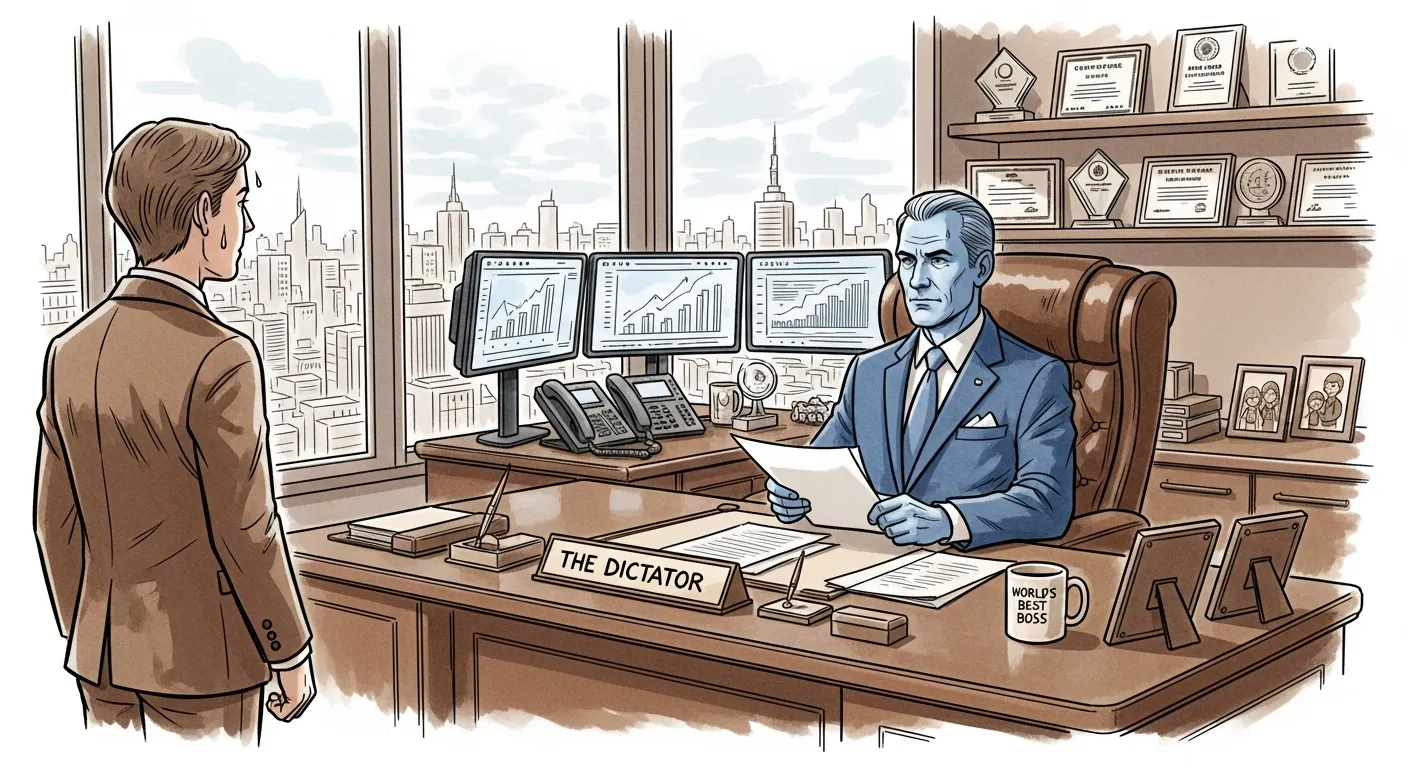
Dictators thrive in careers with clear hierarchies, established procedures, and minimal room for creative interpretation. If a job has a manual, you've read it. If it doesn't have a manual, you're probably writing one.
You're drawn to roles where competence is measurable and effort is rewarded—accounting, project management, compliance, operations. Fields where "attention to detail" is a genuine requirement rather than something people put on their resume because they can't think of real skills.
The Model Employee (With Footnotes)
On paper, you're exceptional. You meet deadlines. You follow procedures. You keep meticulous records that have saved projects more than once, though no one ever thanks you because preventing disasters is invisible work.
Your loyalty to organizations borders on the concerning. You've stayed at jobs years past their expiration date because leaving felt like quitting, and quitting felt like failure. The company could be actively on fire and you'd still feel guilty about updating your LinkedIn.
Management roles find you eventually, whether you seek them or not. Someone has to maintain standards, and you've made it abundantly clear—through sighs, through emails, through pointed glances at the clock—that you're willing to be that someone.
The Cost of Excellence
Here's what colleagues experience: a person who does excellent work and makes everyone else feel vaguely inadequate about their own. Your standards aren't unreasonable, but they're relentless. The way you notice when reports are formatted incorrectly. The follow-up questions that sound helpful but feel like cross-examinations.
You genuinely believe you're being helpful when you point out errors. You're saving people from future embarrassment. You're maintaining quality. The fact that team morale dips slightly whenever you join a project is surely coincidental.
Finding Your Lane
The healthiest career path for a Dictator is one where your precision is valued rather than tolerated. Technical roles. Specialized fields. Anywhere that "this person never lets anything slip through" is a feature, not a personality quirk people have learned to work around.
The alternative is management, where you'll either learn to channel your standards productively or slowly discover why your team keeps requesting transfers.
Understanding your career patterns can help you make more conscious choices.
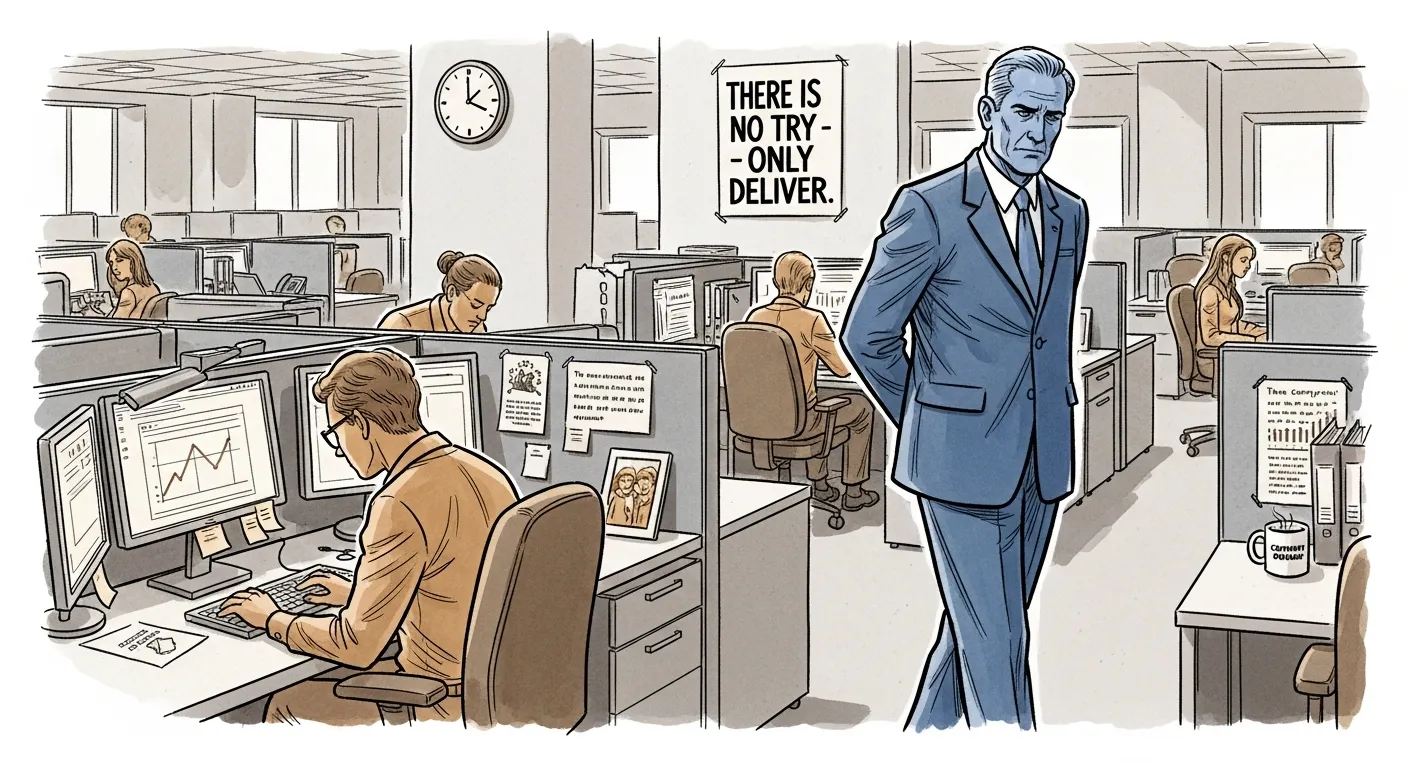
The Dictator at Work
You're the person who creates the systems everyone else follows. Not because you're charming or particularly inspiring, but because you simply won't stop until things work your way. Colleagues have complicated feelings about this.
The Unspoken Manager
You might not have the official title, but you function as the de facto quality controller. Projects that pass through you are bulletproof—deadlines are met, details are caught, edge cases are handled. The problem is the cost.
Your way of working is exhausting because it extends beyond you. You notice when others are slacking. You flag mistakes that maybe could've been caught later, but you catch them now. You follow up on things that were supposed to happen. This is valuable work, but it comes with an undercurrent of judgment that people can feel.
The Collaboration Problem
Teamwork with you is like working with someone who's perpetually grading your performance. You offer input on projects you weren't asked to weigh in on. You suggest "better" ways to do routine tasks. You question decisions that don't align with how you'd make them.
Occasionally you're right and people quietly appreciate it. More often, they just feel watched. There's a difference between having high standards and making everyone around you feel inadequate, and you live in the space between those two things without fully grasping the distinction.
Where You Excel
The healthiest work environment for a Dictator is one where precision is genuinely valued and where you have enough authority that people expect you to have opinions. Technical roles, specialized fields, positions where your attention to detail prevents actual problems. Here, your nature becomes a feature instead of a personality quirk people tolerate.
When you find work that needs your specific kind of rigor, the exhaustion drops. People stop resenting you because they actually need what you do. It's still work done under your terms, but at least everyone signed up for it.
Awareness of these tendencies can improve your professional relationships.

Conclusion
The Dictator personality is fascinating in its contradictions. You're reliable but rigid. Competent but controlling. Honest but harsh. You genuinely believe you're holding things together, and often you are—the problem is the cost of that holding.
What You Actually Are
You're someone who experiences the world as chaotic by default and responds by imposing order. This impulse isn't wrong—sometimes things do need structure. But you've extended it beyond systems into people, and that's where things get complicated.
You believe that if everyone just followed the right process, things would work. If they just listened to you, they'd make better choices. If they just understood that your way is the more efficient way, they'd thank you. Except people aren't systems. They're chaotic in ways that matter—ways that lead to growth, connection, and actual living.
The Core Issue
Your need for control isn't really about control. It's about anxiety. When things are structured and predictable, you feel safe. When they're not, you panic. So you impose order, and for a moment, the anxiety decreases. Rinse, repeat, your whole life.
The people around you have learned to either accept this or leave. Some genuinely value your reliability. Others stay because it's easier than fighting. Neither is the same as actual connection.
The Possibility
What makes the Dictator type interesting is that you have the capacity to actually change—if you want to. You have discipline. You can commit to new patterns. You already commit to everything, so why not commit to being a little less controlling?
This doesn't mean abandoning your standards. It means recognizing that other people's standards, even when they're different from yours, aren't inherently wrong. It means letting some things be inefficient. It means accepting that your way isn't the only way.
This will feel wrong. This will feel irresponsible. But it's the only way the people around you stop feeling like they're being managed and start feeling like they're being loved.
Self-acceptance begins with honest self-reflection. Your shadow side is not your enemy - it's simply another part of your human experience worth understanding and integrating.