The Approval Addict
AOWC
(aka ENFJ)
Annoying • Overthinker • Whiny • Controlling
Bending over backwards until you break. You've built your entire identity around making others happy—except yourself.

Explore This Type

Introduction
Who is the Approval Addict personality type?
AOWC (Approval Addict) is a personality type with the Annoying, Overthinker, Whiny, and Controlling traits. These people desperately crave external validation, constantly seeking approval from others to mask their own deep insecurities. They are armed with rigid opinions that no one asked for and a persistent need to fix everything—usually making things worse.
When the whole world is silent, this type will find a way to make it worse.
People with the Approval Addict personality type are wired to fail gloriously by trying to impose their so-called “values” on everyone around them. Thoughtful and idealistic? More like exhausting and impossible. They rarely shy away from forcing their opinions on anyone unlucky enough to cross their path, even when it’s entirely unwelcome.
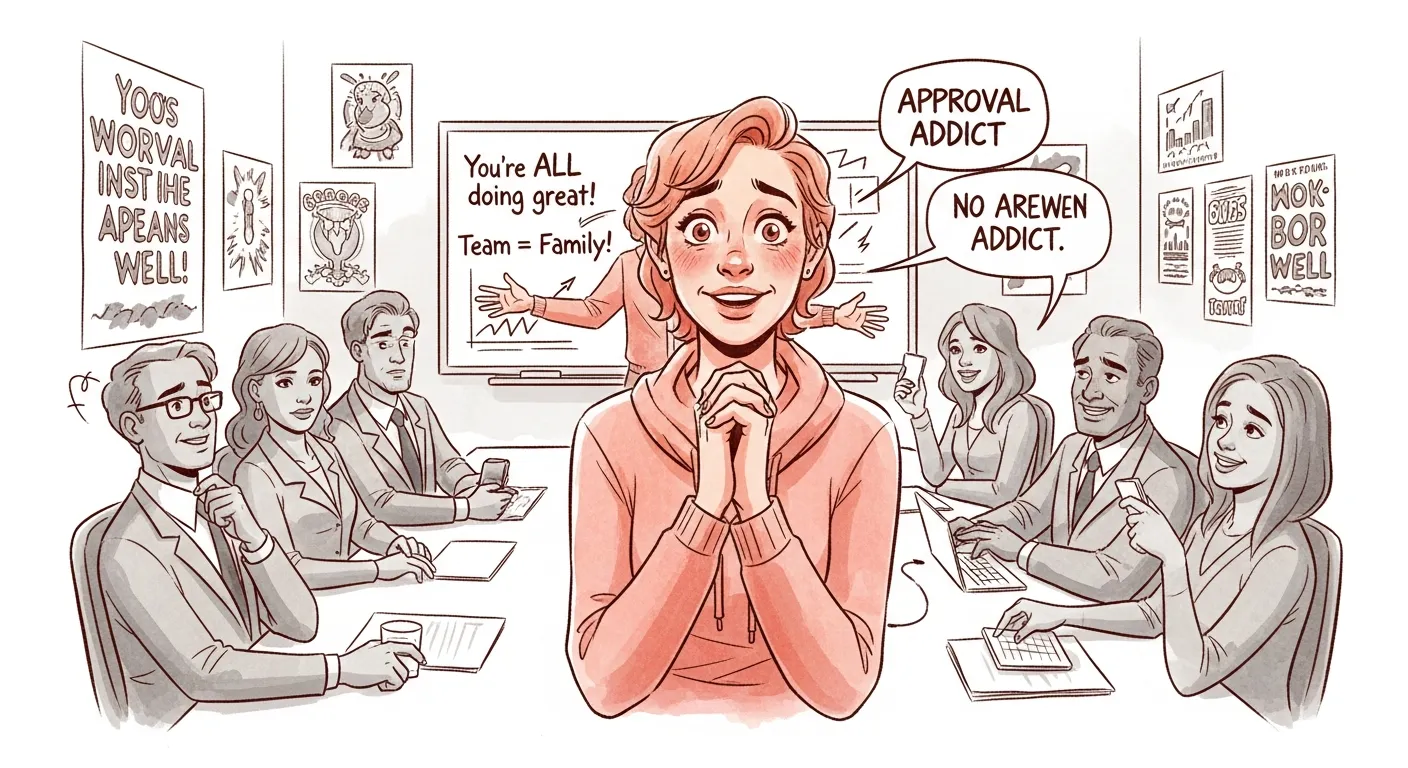
Born to lead by demanding endless praise, Approval Addicts can be found everywhere from dysfunctional family gatherings to chaotic workplaces. Their charm only goes so far before exhaustion sets in—and nobody feels fulfilled except them, in their own self-obsessed way. If you think guiding friends to grow is joyful, guess again: it’s more like micromanaging them into resentment.
Their delusional optimism in the face of disaster is almost impressive if it weren’t so tiresome.
Speaking Up for What’s Right
Approval Addicts love to talk about values like “authenticity” and “altruism,” but mostly as excuses to dominate conversations and guilt-trip anyone who dares disagree. When they spot injustice—or more often, just something that doesn’t serve their ego—they speak up louder and longer than you could ever wish for.
They have an annoying knack for pretending they understand everyone’s feelings and motivations, which usually translates to interrupting with unsolicited “help” and heavy-handed advice. Their persuasive communication often feels more like emotional manipulation—because, let’s face it, it is.
What they really stand for is standing up for themselves, disguised as an innate, unwavering commitment to “justice.” Their secret weapon? A self-righteousness so pure and inflexible that it allows zero room for criticism or compromise.
Getting Involved
Approval Addicts convince themselves they genuinely care, but their need to “help” others usually turns into a relentless, exhausting campaign of unsolicited problem-solving. When they care about someone, they don’t just offer advice—they insist on controlling the solution like it’s the only way to fix things, even if it bulldozes over boundaries.
Unfortunately, their so-called insights are often just misread situations packaged as “help,” and their attempts at improvement can feel like chronic micro-managing. Loved ones might start feeling more criticized than supported, but that rarely stops the Approval Addict—they insist that if people just listened more, everything would be perfect.
Leading the Way
This type dreams of being the noble altruist but often ends up as the exhausting leader no one asked for, ready to take all the slings and arrows but only because they need to feel important. Their “strength” is their stubbornness, which allows them to herd others into doing what they believe is “right”—which, spoiler, is mostly what makes the Approval Addict feel good about themselves.
They try to lead by example, but their definition of “compassion and dedication” often means smothering others with their control and endless commentary. Even the smallest choice becomes a chance to exert influence—usually pushing everyone else’s patience to the brink of collapse.
Approval Addicts You May Know
Barack Obama — Campaign-led approval seeking at its finest.
Oprah Winfrey — Master of turning every conversation into her personal soapbox.
John Cusack — Overthinker’s nightmare role model.
Ben Affleck — Drama meets relentless need for validation.
Malala Yousafzai — Inspiring, yet with an approval-seeking undercurrent.
Jennifer Lawrence — Charm with a side of whiny attachment.
Sean Connery — Classic example of controlling presence disguised as leadership.
Maya Angelou — Profound words, approval craving behind the curtain.
Daenerys Targaryen — Fiery drive powered mostly by a desperate need to be adored.
Morpheus — The overrated persuasiveness of the Approval Addict.
Elizabeth Bennet — Spicy in theory, exhausting in practice.
The Oracle — Know-it-all who’s really just a control freak.
Skyler White — Whining and controlling rolled into one.
Laurel Lance — Trying to lead with love but often just annoying.
Isobel Crawley — Drama and control mixed in a neat Victorian package.
Seeley Booth — The conflicted approval seeker you hate to love.
Strengths & Weaknesses
Approval Addict Strengths
- Desperately Receptive – As an Approval Addict, your strong opinions desperately beg for validation, yet somehow you manage to pretend you’re open-minded. You reluctantly allow others to express themselves, but only because you need to latch onto every scrap of attention possible. Even when you don’t agree, you nod along so they’ll like you more.
- Reliably Tiresome – There’s nothing quite like the crushing burden you place on yourself to never disappoint anyone — even when it’s utterly pointless. Your inability to say "no" ensures you overcommit hopelessly, becoming the reliable human doormat everyone avoids because you never stop trying.
- Passionately Draining – You cram your life with hobbies not because you enjoy them, but to fill the unbearable void of meaninglessness. Hiking, cooking, dancing, or nurturing those poor houseplants—anything to convince yourself you’re not wasting space. Spoiler: you still are.
- Painfully Altruistic – You cling to a fantasy that your self-sacrifice creates positive change, but your efforts mostly result in emotional exhaustion and people quietly resenting you. Your "fairness" is less about justice and more about proving how much you suffer for others, which only compounds your misery.
- Charismatically Overbearing – You thrive on being center stage and desperately rallying others to your causes — usually just to avoid facing the emptiness inside. Your forced empathy often manifests as an awkward attempt to make others feel seen, which usually ends up pushing people away instead.
Approval Addict Weaknesses
- Hopelessly Unrealistic – You pile on impossible ideals about saving the world, expecting yourself to solve every problem. Newsflash: you can’t. This fantasy sets you up to fail spectacularly and leaves you emotionally drained, unable to help anyone — including yourself.
- Suffocatingly Idealistic – Your rigid notions of right and wrong make you bewildered by basic human fallibility. When others don’t live up to your moral script, you implode internally and treat yourself and everyone else like failures, perpetuating your cycle of self-loathing.
- Patronizingly Condescending – Your attempts to “educate” others come off as smothering lectures nobody asked for. Your penchant for unsolicited advice guarantees you’ll alienate people faster than you can say “I’m just trying to help.”
- Intensely Overbearing – You force your relentless self-improvement agenda on anyone within earshot, irrespective of whether they want it. Your inability to respect boundaries results in more burnt bridges than constructive growth — but hey, at least you tried.
- Emotionally Exploitative – Your overflowing empathy mostly means absorbing everyone else’s problems like emotional sponge who then promptly collapses. Instead of strength, it grants you chronic exhaustion and a permanent seat on the victim’s bench.
Romantic Relationships
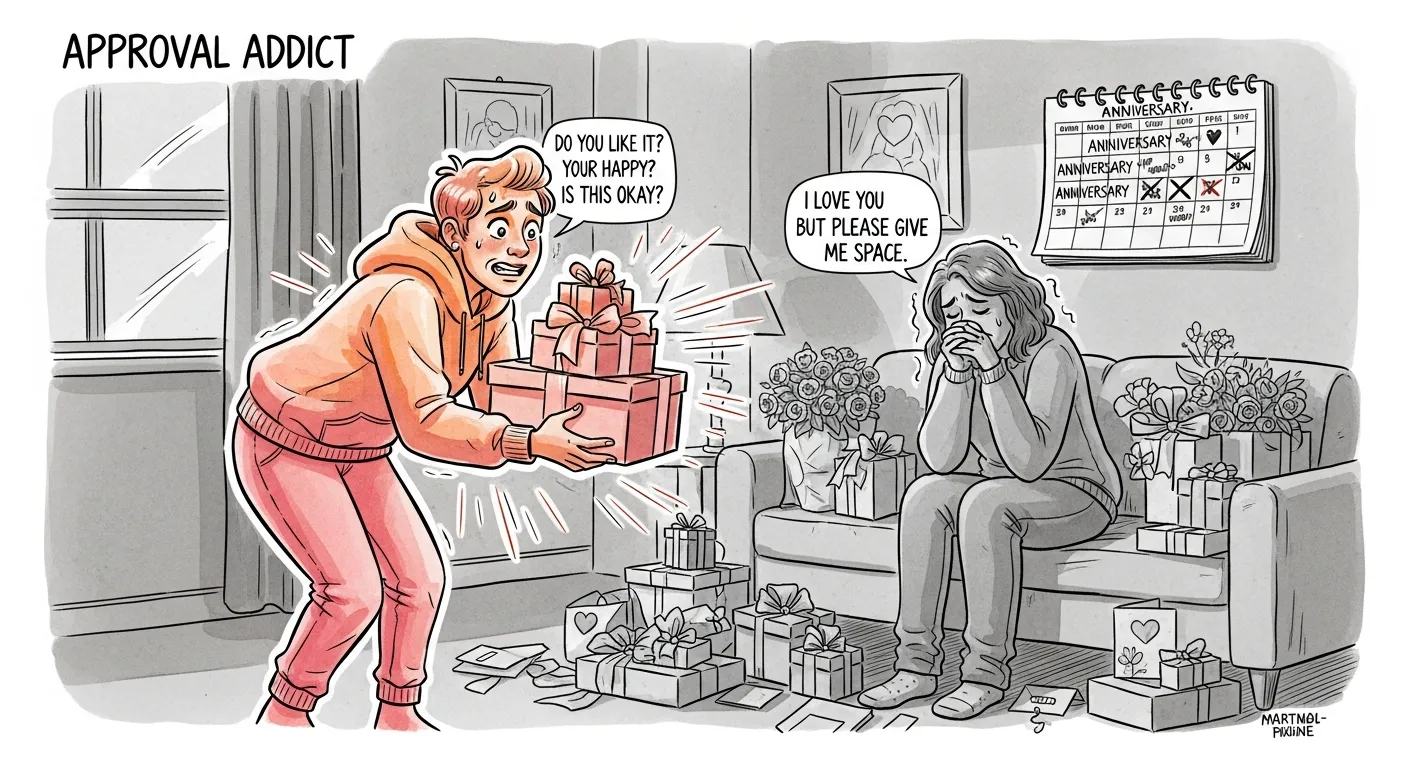
If you’re one of the Approval Addicts (AOWC), prepare to be reminded that your love life is basically a showcase of your endless neediness and desperate craving for validation. When it comes to romance, you dive in with the enthusiasm of someone chasing approval like it’s the last donut at a meeting—intense, exhausting, and utterly self-defeating. Your heart isn’t looking for a partner; it’s just hunting for someone to approve of you so you can momentarily forget how hollow you feel.
You may appear outgoing or even a bit too eager, but don’t be fooled—those fleeting attractions never satisfy you, and your standards are less about true connection and more about desperately clinging to anyone who won’t outright reject you. It’s the painful realization of how rare genuine connection is that probably fuels your anxious attempts to escalate any spark into a raging fire, mostly because you need constant reassurance that you’re not as disappointing as you fear.
Moving Beyond the Dating Game
When an Approval Addict falls, they fall hard—and not in the quiet, graceful way a functional adult might. No, you make it painfully obvious, often making the first move not because you’re confident, but because you simply can’t stand waiting for rejection. Your eagerness and emotional overexposure can be refreshing to some, or just plain exhausting to most, but it invariably means you’ll rack up more rejections than any sane person should endure.
But keep digging—because once you find someone who, by some cruel mistake, does want to stick around, you’ll dig yourself into a pit of over-involvement and suffocating intensity, all in the name of proving your worth to them.
Dreaming Together
From date one to date fifty, the Approval Addict pushes every conversation into the deep end—not out of genuine curiosity, but to fish for signs that your partner might hold you in any kind of esteem. Forget light banter about TV shows; you have to know their hopes, dreams, and how they can prop you up forever. When the relationship actually deepens (once in a blue moon), you take great pride in leeching on their ambitions as if it will make your own failures less visible.
Watch out: this self-sacrificing (or self-neglecting) obsession with your partner’s growth usually backfires spectacularly. Either they get overwhelmed by your neediness and insecurity, or they resent being pushed to change for someone who can’t even keep it together themselves. The lesson? Maybe stop trying so hard to “help” before you destroy what little you have.
The Long Haul
Among all personality types, the Approval Addict is perhaps the most desperate to jump into serious commitment before the honeymoon phase ends. Dating isn’t a game—it’s a validation vacuum where you hope to suck every drop of reassurance you can. Even in the earliest days, you focus obsessively on long-term potential, as if obsessing over the future might cover up the glaring lack of confidence you carry.
Yes, you want to be dependable and trustworthy, but mostly you want to be indispensable, because nothing screams “I love myself” quite like trying to tether your self-worth entirely to someone else’s approval. When this fixation doesn’t overwhelm you, it might allow brief moments of “love”—but only if you can somehow stop yourself from losing your identity entirely in the process.
Embrace this insight as a reluctant confession: your romantic life is a mess not because of the world, but because of how deeply the Approval Addict wires your need for constant validation. Understanding this shadow side is the first step. The second? Learning to maybe, just maybe, hate yourself a little less. But don’t hold your breath.
Remember: recognizing these patterns is the first step toward healthier relationships.
Friendships
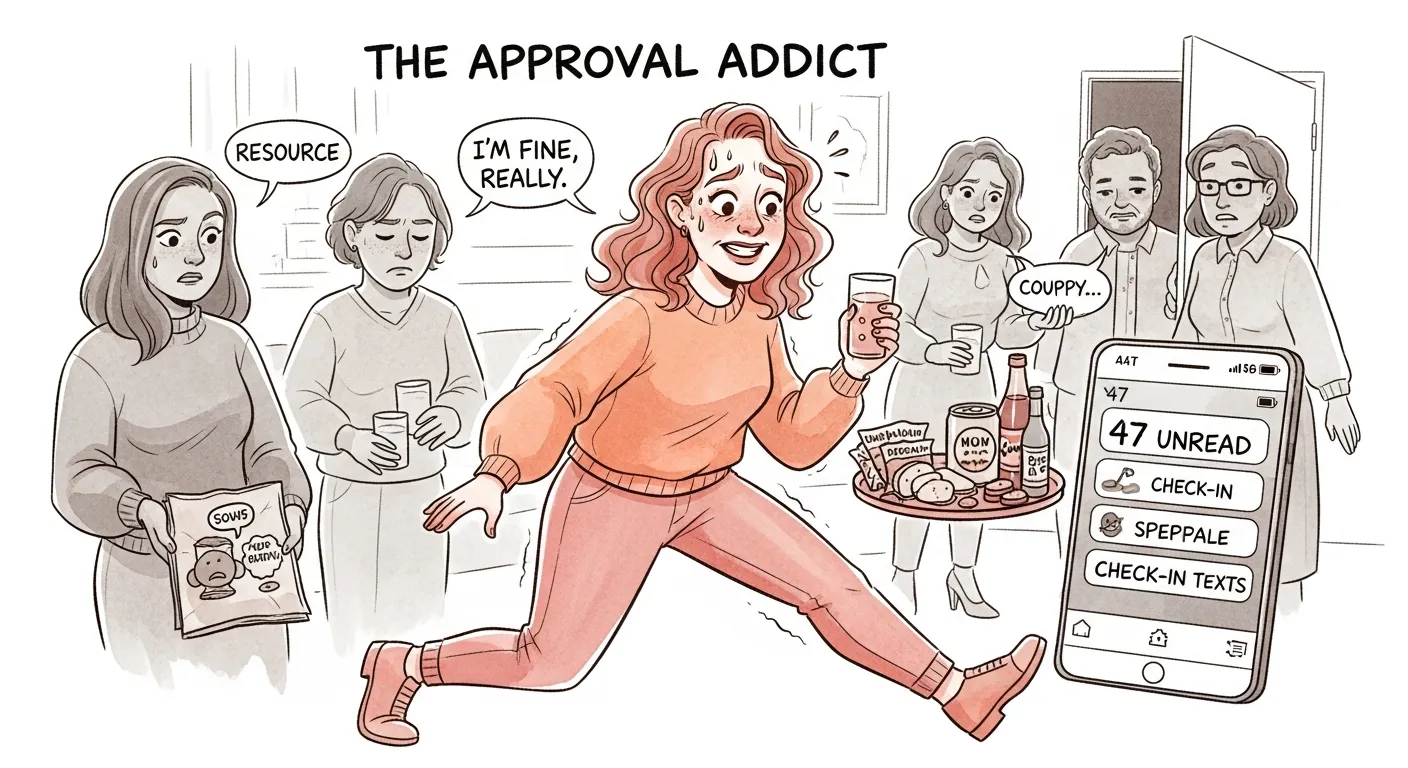
For those cursed with the Approval Addict personality, connecting with others is less about genuine enjoyment and more about desperately clinging to validation from anyone within shouting distance. Friendship isn’t a joyful bond; it’s a nerve-wracking treadmill of trying way too hard to be liked. Because of this, these personalities expend an exhausting amount of energy staying “close” to others—mostly because they fear going unnoticed or unloved. Friendships aren’t a source of happiness for them; they’re a source of constant anxiety and self-doubt.
A Wealth of Perspectives
Approval Addicts suffer from an overwhelming need to analyze every quirk, opinion, hope, and folly in others—not out of curiosity, but to manipulate or mirror those traits to secure their friendship. Their fascination with others’ views isn’t genuine; it’s a desperate grasp for social currency. They create an exhausting web of friend groups across every possible social niche—from work to gym to party scenes—because the idea of being left out terrifies them.
Yet, their selective respect is reserved only for those who “get” their own self-important ideals. Anyone who refuses to play their game is met with silent contempt. Approval Addicts only open up with those who affirm their delusions of grandeur and self-righteousness, revealing vulnerabilities that are more about fishing for sympathy than true connection. Their “passion for altruism” is really just a way to broaden their influence and secure more pats on the back.
Through Thick and Thin
If you ever want a friend who drains you emotionally while demanding constant reassurance, you’re looking at an Approval Addict. These types pour endless energy into friendships—not because they care, but because their self-worth is on the line. They don’t just want friends to validate their feelings; they want complete emotional servitude disguised as support.
From their besties to their barely remembered acquaintances, Approval Addicts treat every interaction like a performance, calculated to create unbreakable, if utterly exhausting, bonds. Whether it’s obsessively “helping” a friend polish a resume out of not wanting to be forgotten, or orchestrating an over-the-top birthday party to prove their value, nothing is too much trouble to maintain the facade—because without this, their whole identity crumbles.
Finding Balance
Offering help comes naturally to Approval Addicts, but they inevitably feel bitter when their efforts go ignored or rejected—because of course, anything less than endless gratitude confirms their deepest fear of being invisible. When friends don’t comply with their well-intentioned manipulation, they become judgmental and controlling, pushing harder with no self-awareness of how obnoxious this makes them.
Luckily, if they somehow mature, they might learn to stop taking every slight personally—though this usually feels like admitting defeat. But strangely enough, loosening the grip on their toxic need for acceptance might lead to a small glimmer of genuine connection. Until then, they’re eternally stuck in a cycle of desperate people-pleasing, pretending they’re fostering compassion instead of obsession.
Parenthood
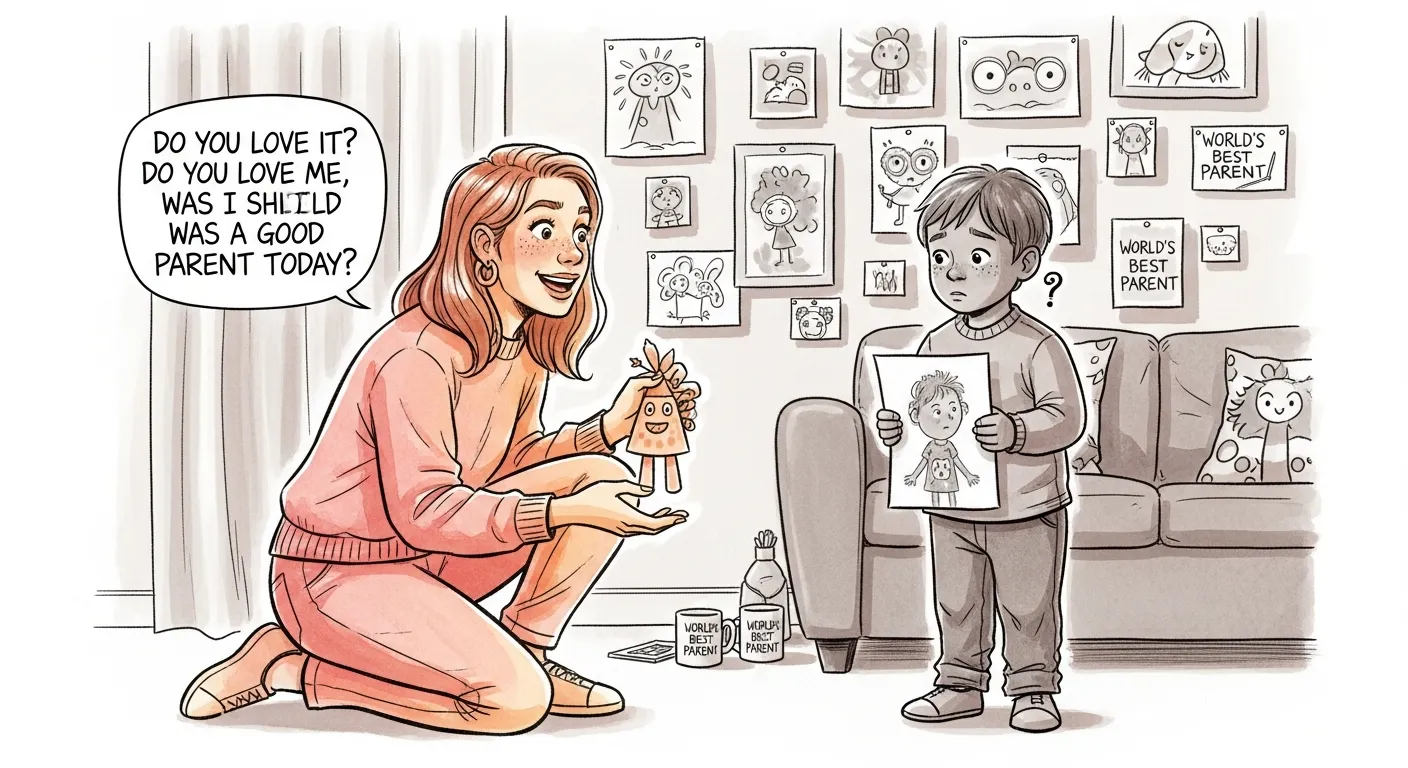
People with the Approval Addict (AOWC) personality type bring a unique blend of desperation and control to parenting, mostly driven by an overwhelming need for external validation. As parents, they are less guided by genuine love and more by the exhausting mission to be liked — by their children, by other parents, by absolutely anyone who might judge them. Their children are often casualties in this quest for approval, expected to perform well enough to reflect their parent's fragile ego.
To maintain their carefully curated image, Approval Addict parents strive to create a superficially supportive home life—encouraging creativity only as long as it looks Instagram-worthy and authenticity only if it's socially acceptable. The genuine personalities of their children rarely get to flourish because the children are too busy trying to live up to the impossible standards of their approval-starved parents.
Life’s Most Important Lessons
Don’t be fooled by the Approval Addict’s insistence on teaching right from wrong—they’re mostly focused on making sure their children behave in ways that don’t embarrass them in front of others. Their “because I said so” moments come with the faint hope that their children will obey not out of morality, but out of fear that disobedience will further threaten the parent’s fragile social standing.
These parents excel at mixing vague ideals with heavy-handed rules, often confusing children by preaching authenticity while demanding conformity. Their attempts at leading by example usually end up modeling anxiety, people-pleasing, and a constant need for reassurance.
Even strictness here is a performance, a misguided attempt to enforce respectability over real values. The Approval Addict teaches responsibility, but only insofar as it reflects well on the family name.
At best, these parents embody an exhausting mix of superficial compassion and performative fairness, unintentionally raising children who are equally burdened by people-pleasing tendencies and self-doubt.
Great Expectations
Approval Addicts hold their children to frustratingly high and inconsistent standards. These expectations rarely stem from a genuine desire to nurture but instead from an insecure need to shape their children into trophies—symbols of their own approval-worthiness.
Children raised under such scrutinizing eyes constantly battle the fear that their worth is contingent on meeting unbearable demands. They might quietly wonder if they love their parents or just the idea of themselves that their parents desperately want to see.
Often, these parents forget to reassure their children that unconditional love exists beyond accomplishments. When offered, this reassurance feels more like a fragile ceasefire than a secure promise.
A Bedrock of Support
Though Approval Addicts might imagine themselves as a fortress of emotional support, their children are more likely to perceive emotional whiplash: a mixture of desperate approval-seeking, controlling behaviors, and inconsistent empathy.
Whatever love or acceptance they attempt to provide is often wrapped in strings tied to performance and social appearance. Their support rarely feels unconditional or stable, leaving children to piece together their own resilience from fractured approval.
In the end, children of Approval Addicts grow up deeply aware of what it feels like to live in a house where love is earned, not freely given—a lesson that often complicates their own messy journeys toward self-acceptance.
Career Paths
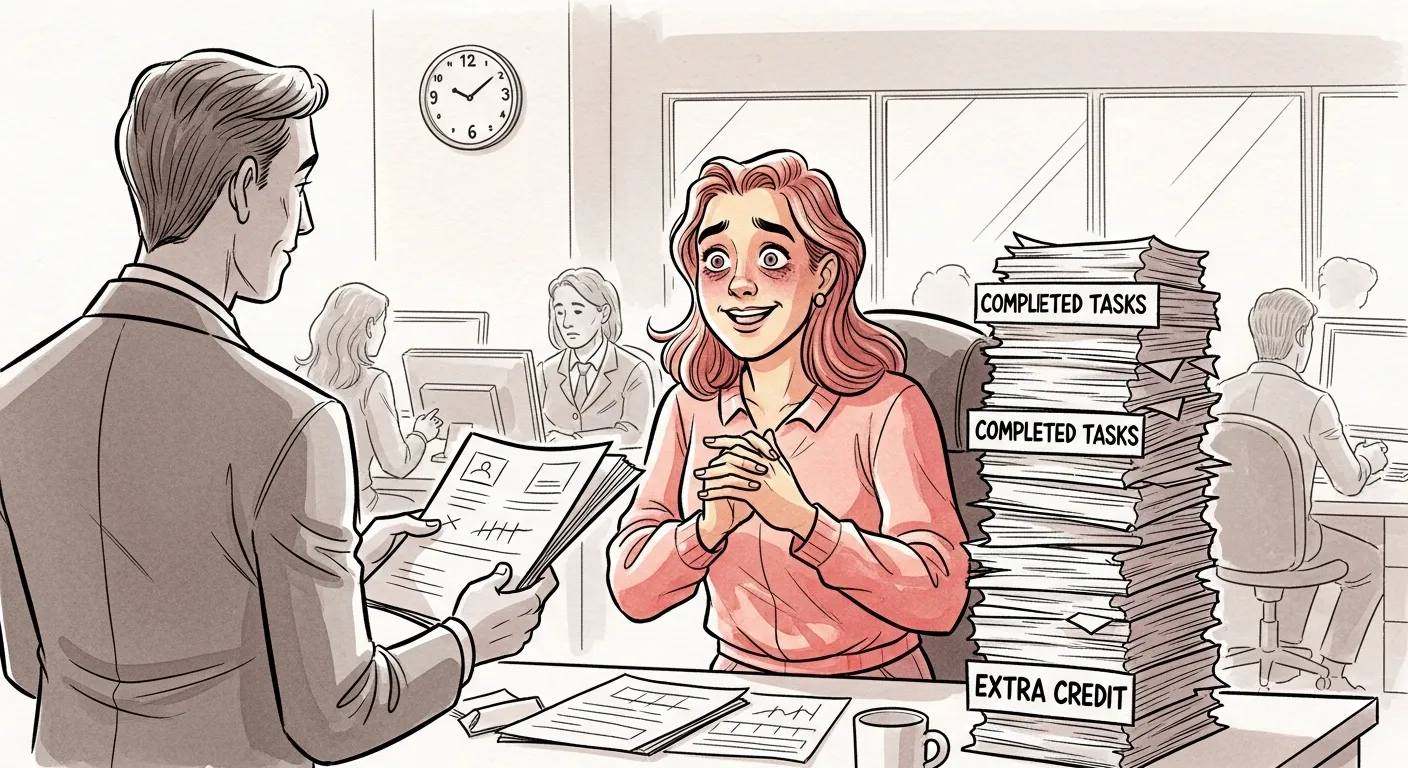
When it comes to choosing a career, Approval Addicts are destined to chase meaningless validation rather than actual fulfillment. They crave the spotlight—not for any genuine contribution, but simply so others will notice them. Their exhausting need for others’ approval drives them to cling to roles where charisma masks their glaring insecurities. Whether they are painfully managing a boardroom or awkwardly serving coffee, their desperation to be liked will swamp any actual skill or passion.
Approval Addicts are rarely short on ways to undermine themselves in the workplace, as their ceaseless need for validation always trumps sensible career choices.
Earning Their Place
Thanks to their compulsive people-pleasing and shallow emotional manipulations, Approval Addicts occasionally stumble into people-oriented fields like human resources, event management, or public relations. They delude themselves that guiding others to ‘grow’ is a noble purpose, though it often just masks their inability to focus on their own weaknesses. They gravitate toward careers with superficial altruism—think social work, counseling, or teaching—seeking constant recognition for their hollow efforts.
Far from quietly fading, Approval Addicts insist on leadership roles not because they’re qualified, but because they assume attention equals worth.
You’ll find Approval Addicts parachuting into positions of influence, from public office to nonprofits to startups, desperately fishing for adoration. They also con their way into jobs as consultants, advisors, and managers—whatever gets them noticed. No matter the role, they never lose sight of their primary aim: to be seen improving lives—even if only as a shiny front for their own insecurities. Their so-called creativity is usually just frantic scrambling to stay relevant and liked in sales, marketing, customer service, or whatever catches the approval wind of the day.
Finding the Deeper Issues
Approval Addicts think they are bold for seeking challenges, but only if those challenges promise applause. Repetitive, isolated work makes them panic—they hate feeling invisible or inconsequential. Their desperate need to watch themselves at work, to feel impact, is fueled by deep-rooted self-doubt. Legacy? Positive change? More like leaving a trail of worn-out ego stroking.
They want to see gratitude rolling in like a tidal wave—even if it means sacrificing authenticity or sanity to get it.
Despite occasional flashes of insight, Approval Addicts are trapped in a loop of craving more validation as a way to mask their chronic dissatisfaction. When bored or stuck, rather than reflecting honestly, they double down on performative acts of ‘altruism’—all to feed their relentless hunger to be liked. Their careers might modestly contribute to something bigger, but only as a backdrop to their endless approval-seeking drama.
Understanding your career patterns can help you make more conscious choices.
The Approval Addict at Work
How the Approval Addict Fails Spectacularly at Work
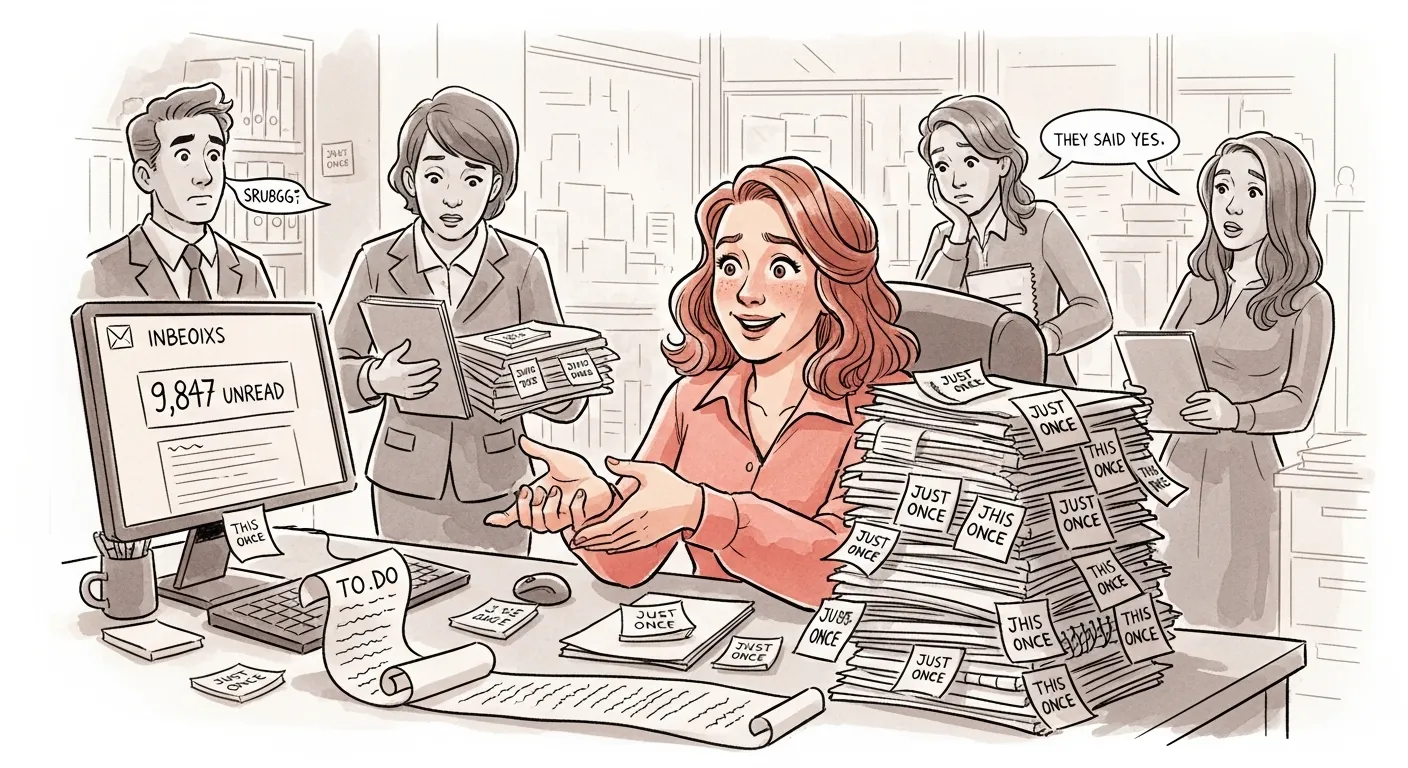
If you're wired as an Approval Addict—caught between being Annoying and Overthinking, Robotic and Controlling, with a splash of Miserable narcissism—you might as well prepare yourself for a career defined by constant self-sabotage. At work, your desperate need for validation turns even the simplest tasks into exhausting, approval-chasing marathons, where mistakes are inevitable and self-doubt reigns supreme.
You obsessively second-guess every decision, paralyzed by the fear of displeasing everyone around you. This manic need to be liked does nothing but drag your productivity into the abyss, as your mind traps itself in a loop of overanalyzing minor details that no one else even notices. Instead of inspiring others, you drip with insincere coaching mixed with passive-aggressive undertones, creating an environment where genuine connection goes to die.
Your robotic adherence to rules and protocols isn’t a strength—it’s a facade shielding a fragile ego that quakes at any hint of criticism. You micromanage and control with the subtlety of a wrecking ball, only to blame others when your carefully constructed plans crumble under pressure. Embedded beneath all this is a toxic narcissism that convinces you the world revolves around your validation needs, ensuring that your relationships at work remain shallow and transactional at best.
In essence, your career trajectory looks less like a ladder and more like a self-dug pit. Embrace your shadow side: perfectionism stifles growth, and craving approval guarantees disappointment. The sooner you accept that your professional self is destined to be a cautionary tale, the better—because attempting to be a beloved leader while simultaneously alienating everyone is truly an art form.
Awareness of these tendencies can improve your professional relationships.
Conclusion
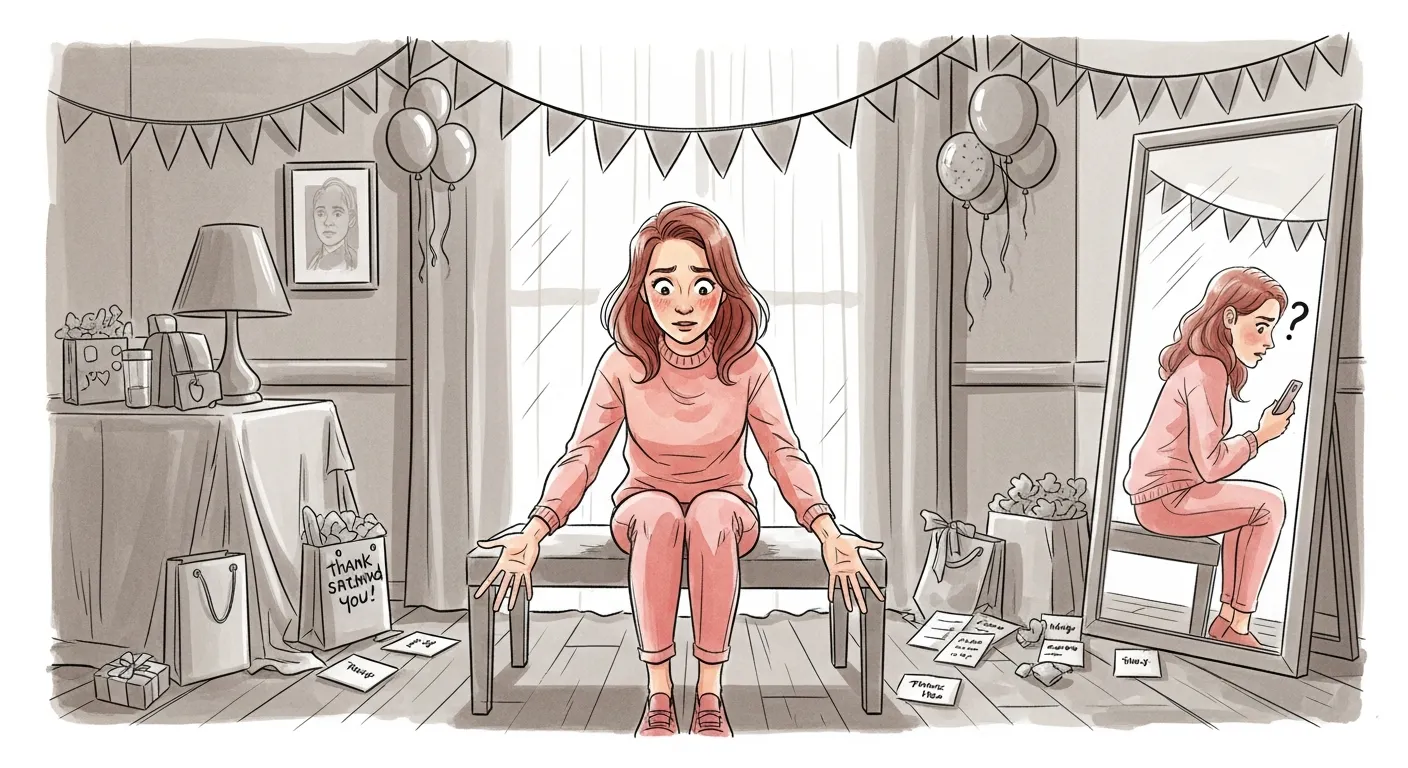
What you have just endured is merely a glimpse into the troubling realities of the Approval Addict (AOWC). Along the way, you may have found yourself muttering, “Wow, this stings a bit too much,” or “Finally, someone’s calling out my desperate need for validation!” You might even wonder, “How can a personality test know me better than I do—yet still hate me this much?”
If you feel seen right now, it’s probably because this is painfully accurate. Years of digging into the Approval Addict’s psyche have revealed your exhausting craving for acceptance, your patronizing charm for getting people to like you, and that underlying dread that nothing you do is ever quite enough. We understand your sorrow, your frantic people-pleasing, and the tragic futility of trying to be everyone’s favorite while losing yourself in the process.
The Approval Addict’s so-called “gifts” include an unhealthy obsession with others’ opinions, an endless capacity to nod along even when it kills you inside, and a talent for exhausting yourself trying to make the world like you. But don’t mistake this for real strength—these are just chains disguised as virtues.
That’s why we’re dedicated to helping Approval Addicts like you not only face the grim truth of your emotional dependencies but also try to survive despite them. Learning about your personality type isn’t just entertaining—it’s a bleak wake-up call that you’ve been living beneath your potential, trapped by the desperate need for external validation.
So here’s the stark question for you, Approval Addict: Are you ready to stop begging for approval and start tolerating the person you actually are? If by some miracle you say yes, our Premium Approval Addict Package offers you a painfully honest look into your unhealthy dynamics, your sabotaged relationships, your doomed career path, and the elusive possibility of carving out some semblance of a life you don’t hate.
Face Your Career Nightmare
Accept Your True Career Fate
Stop pretending you can please everyone at work and start coming to terms with the fact that your compulsive approval-seeking will likely destroy any chance of genuine success. Our Career Suite won’t sugarcoat your weaknesses, but it will help you waste less time chasing jobs you are doomed to fail at and more time wallowing in your natural incompetency.
Self-acceptance begins with honest self-reflection. Your shadow side is not your enemy - it's simply another part of your human experience worth understanding and integrating.
Shadow Insight
"You bend yourself into shapes for others because you're terrified of what remains when you stop performing."
Stay Updated on Your Type
Subscribe to get regular updates and insights about your type.