The Wrecking Ball
LBRS
(aka ISTP)
Loner • Boring • Robotic • Sloppy
Demolishing everything in your path, including yourself. At least you're consistent in your destruction.

Explore This Type

The Wrecking Ball
Who You Really Are
You fix things. Sort of. You take them apart with good intentions, then lose interest halfway through, leaving a trail of half-assembled furniture and abandoned hobbies in your wake. Your apartment is a graveyard of "I'll get back to that" projects.
"I started three new hobbies this month. Finished zero. But I have a lot of new equipment gathering dust."
The Wrecking Ball personality combines the worst of introversion (you can't be bothered with people) with practical skills that somehow never translate into completed tasks. You're the person who confidently says "I can fix that" and then the thing is in pieces on your floor for six weeks.
Your friends learned long ago not to lend you anything they need back in one piece. Not because you're malicious—you genuinely meant to return their drill. It's just that you needed to take it apart to see how it worked, and now there's a spring missing and nobody knows where it went.
The "I Work Best Alone" Myth
You tell yourself you work best alone because other people "slow you down." The reality? You work alone because your process involves long stretches of staring at components, muttering obscenities, and making decisions that would alarm any reasonable collaborator.
Your problem-solving style is less "methodical troubleshooting" and more "aggressive poking until something happens." Sometimes this works. Often it creates two new problems. You've accepted this as a lifestyle.
Communication isn't your strong suit. You give one-word answers to complex questions and multi-paragraph explanations for simple ones. Reading the room? The room is full of parts you're trying to identify. Social cues can wait.
Breaking Things With Confidence
Rules exist for people who don't understand how things actually work. Or so you tell yourself while voiding yet another warranty. Your relationship with instruction manuals is strictly adversarial—they represent someone else's idea of how things should go, and you have your own methods.
This extends beyond physical objects. Social norms, workplace procedures, relationship boundaries—you crash through them all with the same blunt energy. Not because you're rebellious. You just genuinely forgot they existed while focused on whatever's in front of you.
The upside: you occasionally figure out shortcuts nobody else saw. The downside: you also discover why certain safety protocols exist, usually the hard way.
You're not trying to cause chaos. The chaos just... happens around you. Like a natural phenomenon. Like weather. Expensive, inconvenient weather that your friends have learned to budget for.
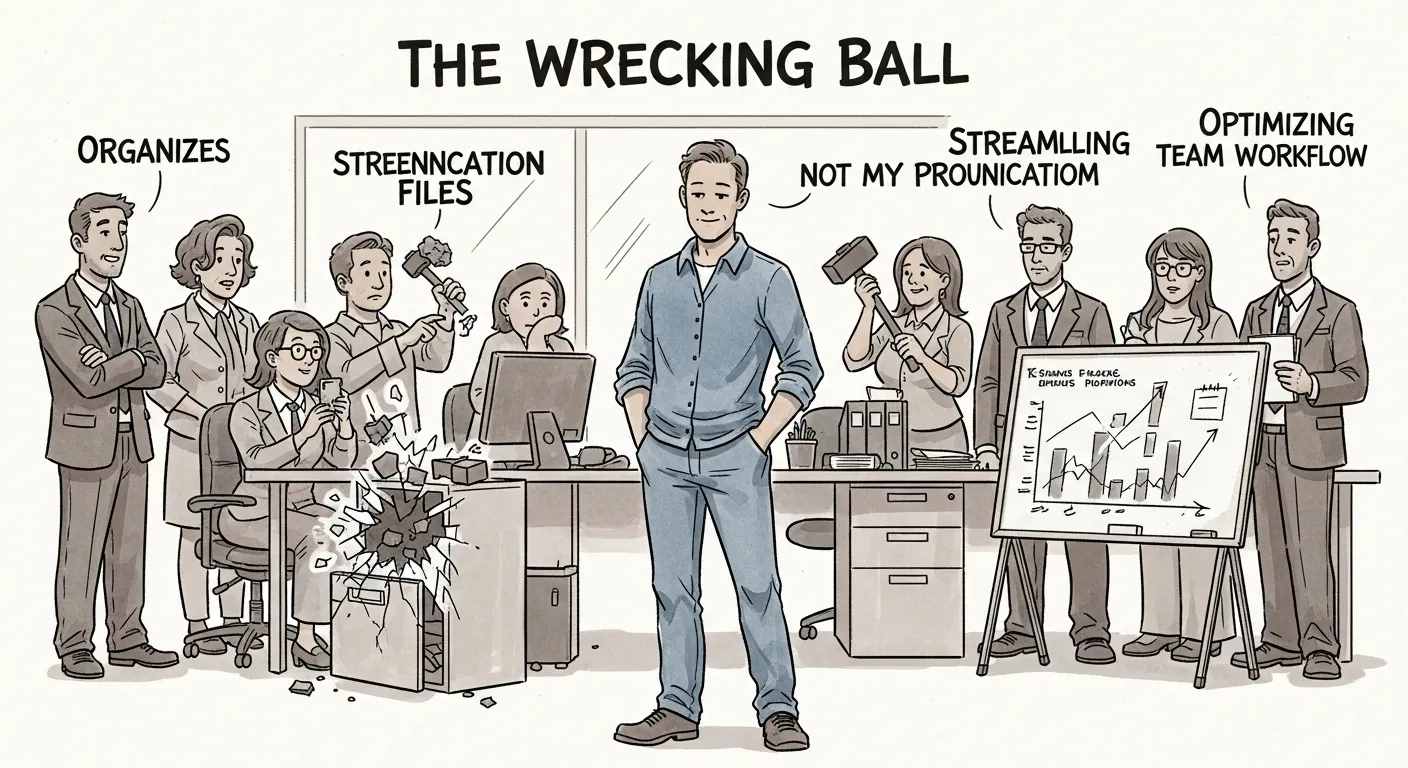
Strengths & Weaknesses
The Wrecking Ball Strengths
- Obsessively Busy and Distracted – People who identify as The Wrecking Ball are often so consumed with some chaotic project or another that they forget why they started it in the first place. Their need to meddle hands-on usually results in more mess than progress, but at least they’re doing something, right?
- Clumsily Ingenious – This type prides itself on ‘creativity’ mostly when it comes to breaking things or finding the most convoluted way to fix them. Their hands-on approach might suggest skill, but it usually just masks a frustratingly inefficient and slapdash handiwork.
- Unpredictably Unreliable – The Wrecking Ball can “go with the flow” when the flow is going their way, but they’re just as likely to bolt off in a random direction without warning or regard for anyone else. Spontaneity here means chaos, and everyone pays for it.
- Brutally Honest to a Fault – They pride themselves on spitting the raw truth, mostly because sugarcoating requires effort they seriously can’t be bothered with. This honesty usually just translates to alienating everyone around them, but at least it’s “authentic.”
- Desperately Independent – These champions of solitude insist on doing everything themselves, mostly because they don’t trust anyone else not to make it worse. The result is predictable: stalled teamwork and plenty of missed opportunities.
- Stuck in the Now – The Wrecking Ball has an almost pathological focus on the present moment, to a point where any consideration of the future or reflection on past mistakes would just be too depressing and demanding. Spoiler: it is.
The Wrecking Ball Weaknesses
- Obnoxiously Unapologetic – Just as easily as they ignore others, they do so unapologetically. Try to suggest a different plan and prepare for blunt dismissal or outright irritation. Their charm is so subtle it’s basically non-existent.
- Emotionally Clueless – While they might try to seem empathetic, it often ends up as a confusing jumble of logic and indifference. When they do attempt to comfort, it usually feels like someone trying to put out a fire by pouring gasoline.
- Secretive to a Fault – The Wrecking Ball is infamously difficult to get close to—withholding personal matters like a grumpy hermit and preferring silence to any meaningful conversation. You probably won’t learn much, ever.
- Bored Easily, Permanently – Novelty is their only fuel, but once the shiny new thing wears off, The Wrecking Ball has zero attention span left. Mastering one thing is clearly out of the question; the next distraction awaits.
- Independence Is a Social Death Sentence – While independence can be good, here it’s just a polite way of saying “socially isolated.” Imposing schedules or any sort of social obligations turns them into a ticking time bomb of resentment.
- Paranoid Skepticism – Their skeptical nature turns into a blockade against any idea that can’t be proven with cold hard facts. This makes growth impossible and relationships frustrating, as trust is just not in their vocabulary.
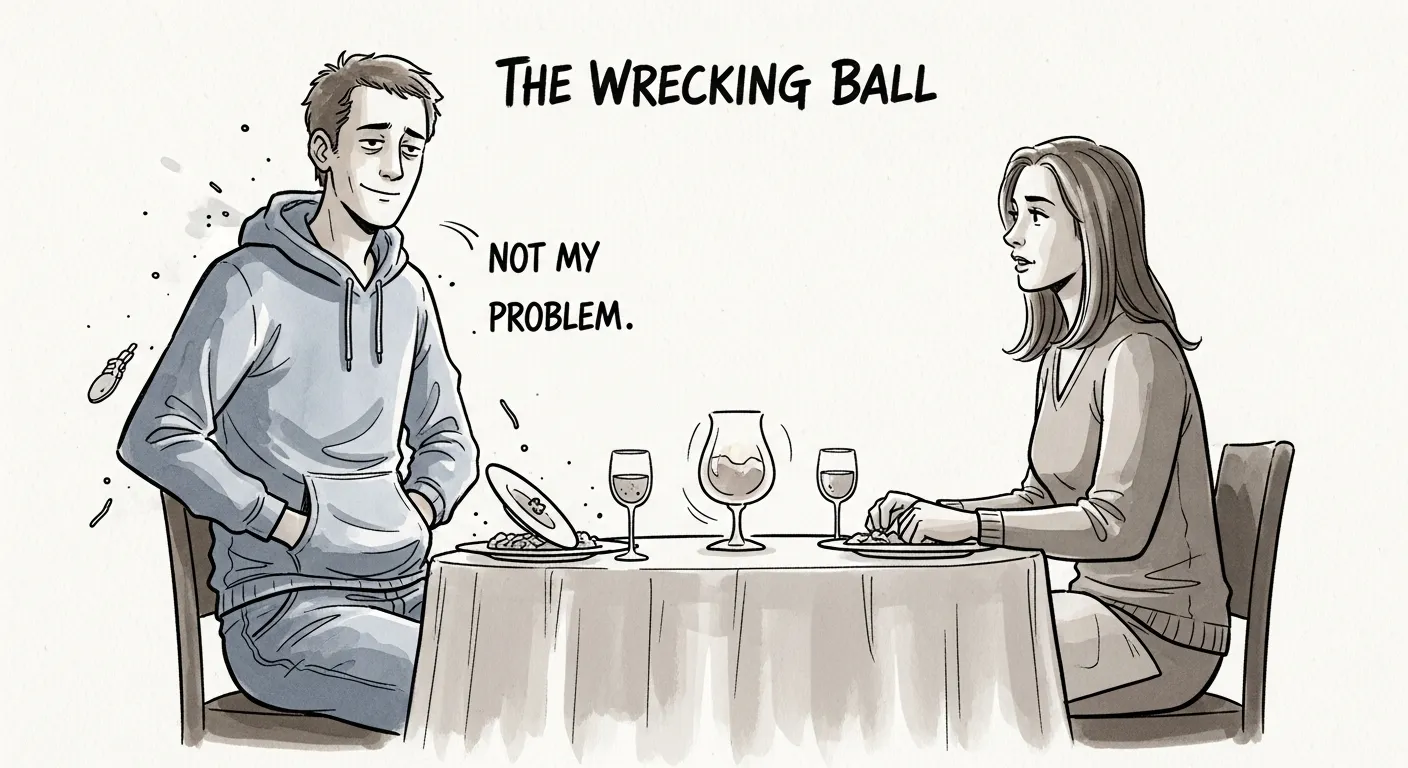
Romantic Relationships
Dating someone who embodies the LBRS personality type, known here as The Wrecking Ball, is less of a dance and more of a demolition project. They oscillate unpredictably between being overwhelmingly annoying and aggressively loner-ish, tossed in with the maddening ability to overthink every tiny interaction. Genuine care is rare, and spontaneity mostly lands as irritability. The Wrecking Ball requires their vast amount of space to avoid complete self-sabotage, and even then it’s a miracle if they tolerate steady company.
An Independent Heart—Or So They Claim
In the early days of dating, The Wrecking Ball is notoriously impossible to truly know. They obsess in the present, yet sabotage connections by dismissing any idea of emotional or future commitment. Partners who fail to meet their exacting and bizarre standards are promptly discarded without remorse.
Personal space isn’t just a request; it’s a desperate need to avoid emotional meltdown. Attempts to guide, control, or schedule their chaos usually prompt an exit stage left. As relationships somehow progress, The Wrecking Ball’s “intimacy” often looks like guarded emotional shutdown. They’re not emotionless—far from it—but they’re deeply insecure and utterly incompetent at expressing feelings, instead expecting everyone else to decode their cryptic silences while managing their emotional wreckage solo.
The Subtle (But Mostly Absent) Art of Communication
Communication with The Wrecking Ball assumes a terrifying game of hide-and-seek where things are left unsaid because they believe mutual misunderstanding suffices. Pushing them to openly discuss commitments or feelings quickly results in panic or disdain. The mere thought of entrapment terrifies them—they need the freedom to erratically alter plans daily without giving anyone a chance to call them out.
Becoming a dependable lifelong partner? Don’t hold your breath. It only happens if The Wrecking Ball miraculously drags themselves into it on their own fractured timetable.
Partners wise enough to tolerate them should discipline themselves not to personalize the maddening indifference. This type thrives in the present, preferring physical distractions over emotional depth, and demands space to flit between false passion and sudden apathy without interrogation.
That said, if The Wrecking Ball could ever muster a shred of consistent expression and reliability, they might avoid being their own worst enemy for once. But don’t count on it.
Remember: recognizing these patterns is the first step toward healthier relationships.

Friendships
Navigating friendships as a Wrecking Ball (LBRS) is less a social playbook and more a chaotic demolition plan. These individuals find solace in their loner tendencies but are annoyingly prone to bursting into social circles like a wrecking ball, leaving a trail of bruised egos and ruined plans. When they choose to tolerate others' company, it’s usually because they have utterly no better options or because they secretly want someone to blame when things go south.
Keeping It Spontaneous (Because Planning Is for Suckers)
Commitment is a foreign concept to the Wrecking Ball. They detest being tied down to any schedule or social expectation, and forcing them to stick to plans will only guarantee swift and merciless abandonment. Friendships with them exist in a state of flux, oscillating between apathetic presence and blunt disappearance. They live purely in the moment—but mostly the moment of whatever destructive impulse strikes their fancy.
If their so-called friends don’t match their erratic whims, those people are promptly discarded like yesterday’s mistakes. Shifts in attitude coming without warning are their signature move, leaving friends confused, exhausted, and emotionally drained. Directness for them often translates into brutally honest dismissal, wrapped up in an air of ‘deal with it or don’t’—because why waste energy on niceties when you can just wreck the whole thing instead?
These wrecking balls possess a peculiar knack for using their limited abilities in competitive ways, often turning even simple hobbies into warfare fields. Their “friends” are usually the unwilling audience to their one-man demolition show, with relationships based more on grudging tolerance during hands-on activities than genuine care or connection.
They occasionally dabble in creativity, but only to the point where it can be weaponized or acted upon immediately—because endless talk and reflection are about as interesting to them as a root canal. They prefer to do (or dismantle) rather than muse, which means friendships rarely evolve beyond the surface, much like their attention spans.
The Surprising (Or Not) Charm of Being a Wrecking Ball
Despite their abrasive nature, Wrecking Balls often find themselves at the center of a surprisingly broad social orbit. This is less a testament to their charm and more because people are inexplicably drawn to chaos, especially when it promises entertainment at their expense. Genuine friendship, however, remains an elusive prize. They might have a crowd of acquaintances and superficial admirers, but very few who truly understand or endure their chaotic nature without regret.
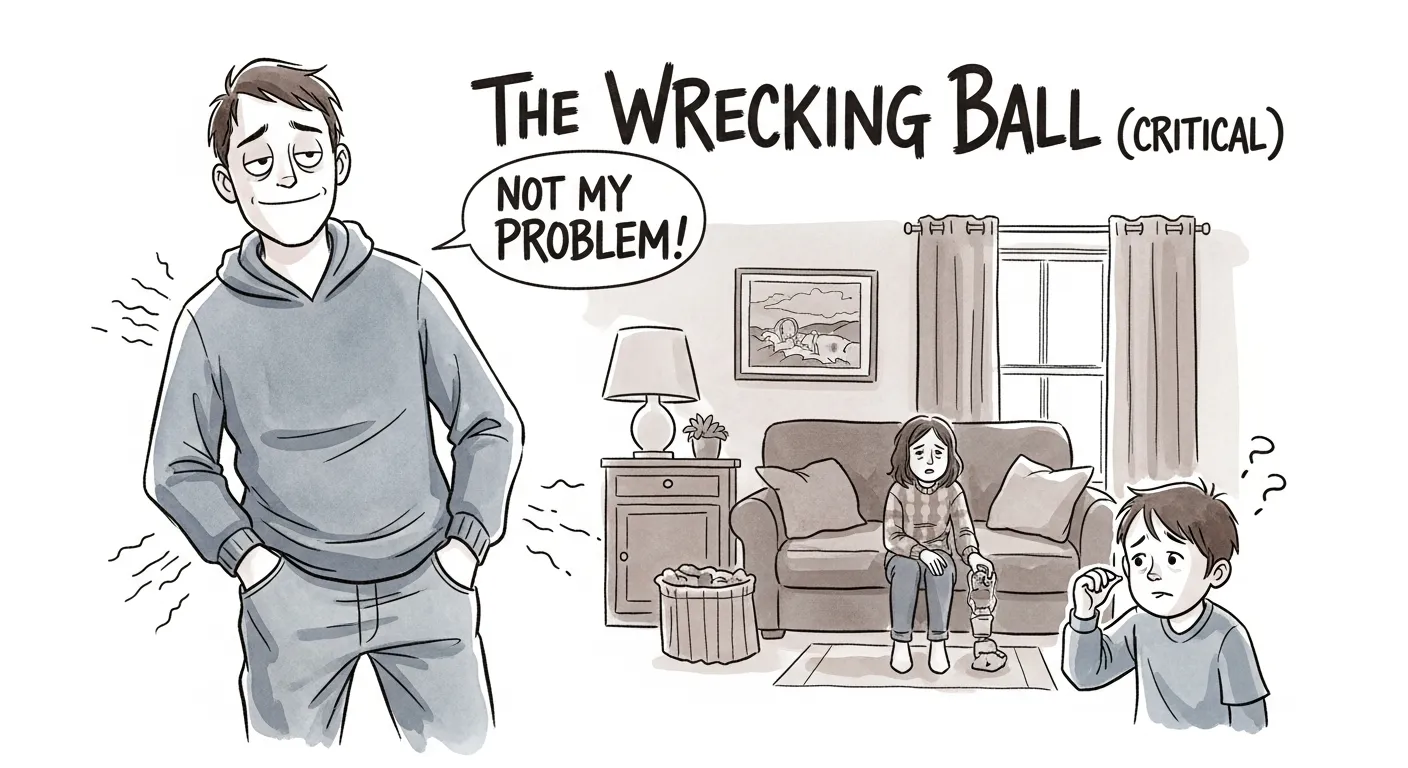
Parenthood
When it comes to parenting, people with the LBRS personality type (The Wrecking Ball) excel at giving their children as much freedom as possible — so long as that freedom leads to spectacularly poor choices. Boundaries? Sensible limits? Forget it. They believe children should express every annoying impulse freely, even if it ruins everything around them.
The world is a chaotic mess, and these parents think it’s meant to be stomped on and trashed, preferably without anyone telling their kids to behave — because rules are just suggestions to ignore. After all, who needs control or structure when failure and disappointment await at every corner?
Though they pretend to be flexible and open-minded, these parents mostly expect their children to waste their freedom in spectacularly unproductive ways. Nothing confounds them more than a kid actually being responsible or doing something worthwhile. Watching TV all day? That’s peak parenting achievement in their eyes.
The World Is Your Dumpster Fire
In early childhood, this laissez-faire disaster parenting style sets the stage for a lifetime of mediocrity. Everything is an opportunity for chaos: blocks aren’t just toys—they’re potential projectiles made to be smashed, tasted, and ignored. This sensory anarchy is music to their ears.
As their children clumsily acquire motor skills, these parents couldn’t be happier to encourage any activity that ends with a mess or broken belongings. Building real things with real tools? Only if it creates a hazard or a trip to urgent care.
If the kids share their traits—impulsive, messy, and prone to whining—then these parents can tag along on every reckless misadventure. They don’t believe in forcing values on their children, mostly because they can’t figure out what values are supposed to be anyway. Their greatest joy is watching their children flail about with astonishing lack of purpose.
Of course, there is one small hurdle: teenagers wired like Wrecking Balls often take rebellion to life-endangering extremes. These parents’ knack for emotional disconnect means they’re utterly unprepared to guide their kids through these crises. Providing emotional support? Forget it. It takes a conscious effort that they’re too lazy to make, leaving their children to emotionally fend for themselves.
Unlock your true potential by embracing your inner wrecking ball: a career defined by chaos and questionable decisions. Accept who you are, but maybe don’t bring any children along for the ride.
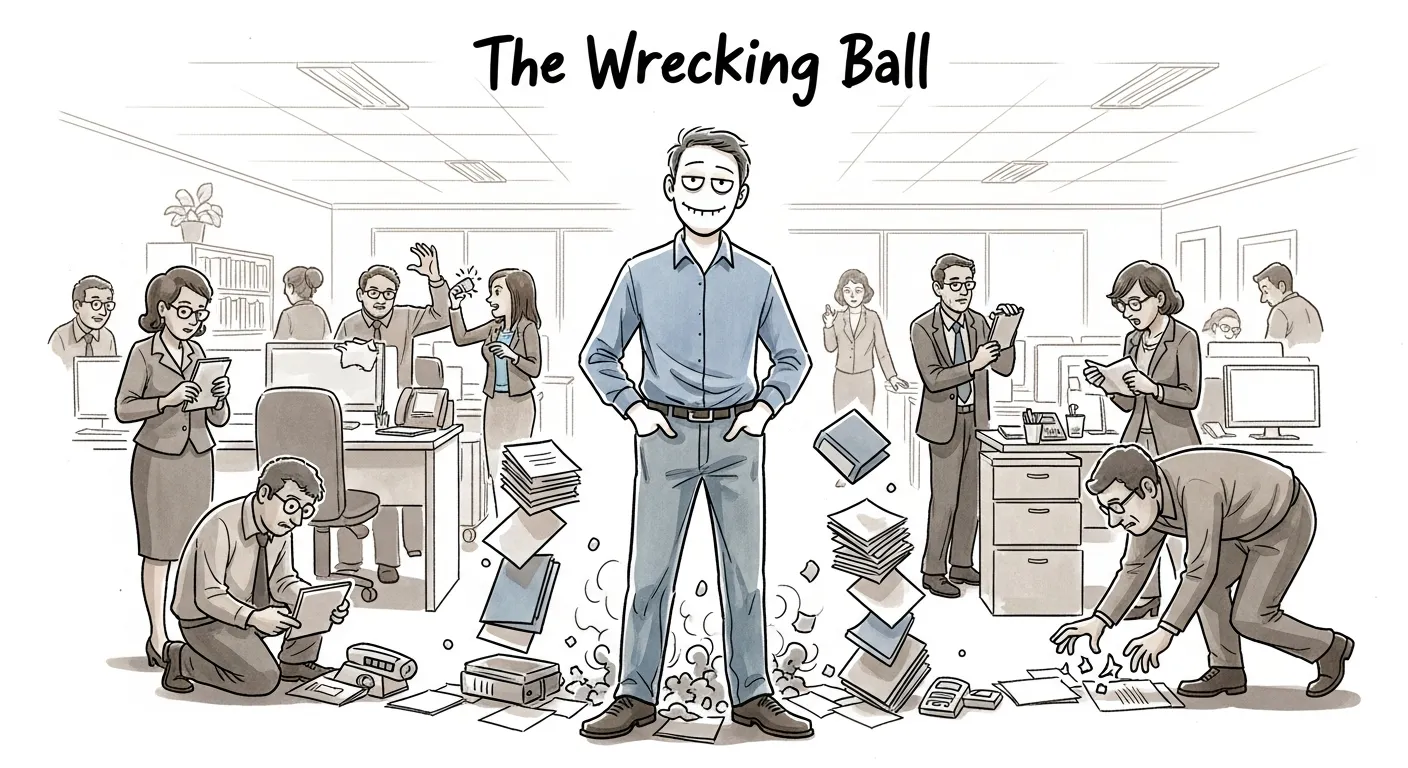
Career Paths
People with the LBRS personality type (The Wrecking Ball) are infamously impossible to pin down when it comes to anything resembling a stable career. They stumble through professional life like a series of unfortunate events, fueled by their relentless craving for chaos and their tragic inability to commit. Diversity and unpredictability aren’t just preferences; they’re a desperate escape from the mess they've made of consistency.
LBRS individuals have about zero tolerance for ideas or projects that require patience or any semblance of long-term thought. They’re wired to jump headfirst into problems, usually causing collateral damage because practical solutions bore them unless they deliver instant gratification. Their fascination with "how things work" tends to devolve into wrecking one thing after another instead of actually fixing anything useful.
Their bizarre combo of false curiosity and erratic energy means LBRS types may find themselves drifting through roles like hapless mechanics, makeshift equipment operators, confused data analysts, or forensic scientists who accidentally destroy the evidence. And, of course, they excel at failing spectacularly in all these areas too.
Forget abstract theory or academic work — that kind of thing is mercifully safe from their destructive hands, but also wholly unappealing. They crave immediate impact and the illusion of control, so long as it doesn’t require sticking around long enough to take responsibility.
“Practical” to an LBRS means running away from deadlines, ignoring complex planning, and sprinkling complaints liberally. Highly structured jobs bore them into existential dread, and their need to dodge uncomfortable social interactions means they’ll either ghost their teams or complain endlessly from the sidelines.
Since they’re stubbornly stuck in the moment — or trying desperately to escape it — LBRS types often end up in crisis roles like firefighters, paramedics, or pilots... but frequently because they fail to plan ahead, not because they’re particularly skilled.
Above all, LBRS people hate feeling trapped. They desperately need the freedom to mess things up on their own terms, to reshuffle schedules, shirk responsibilities, and avoid accountability like it’s a contagious disease. Traditional jobs? Forget about it. Unless you like chaos disguised as career, these individuals are likely to flake out or sabotage any semblance of stability.
That desperate need for freedom also makes them terrible candidates for most employers but potentially viable for self-employment—provided they can tolerate the crushing weight of their own inefficiency.
Embracing the Unpredictable
LBRS folks could technically freelance or start businesses based on any passing fancy — blogging, odd jobs, random athletic attempts, or creative ventures. However, their crippling lack of long-term planning and obsession with instant results means most enterprises crash and burn fast.
If they manage to scrape together a living, it's often one disaster away from dissolution. Traditional jobs that allow some autonomy might hold their short attention span, but only until the next crisis of motivation—or accountability—hits.
The only truly reliable skill LBRS types possess is taking things apart and figuring out how they work—which, ironically, is also their greatest weakness when they don't bother putting things back together. They understand risk, but their relationship with consequences is about as reliable as a paper umbrella in a hurricane. Despite all this, they sometimes stumble into roles in dynamic, chaotic fields — probably because their problem-solving tendencies fit right in.
Understanding your career patterns can help you make more conscious choices.
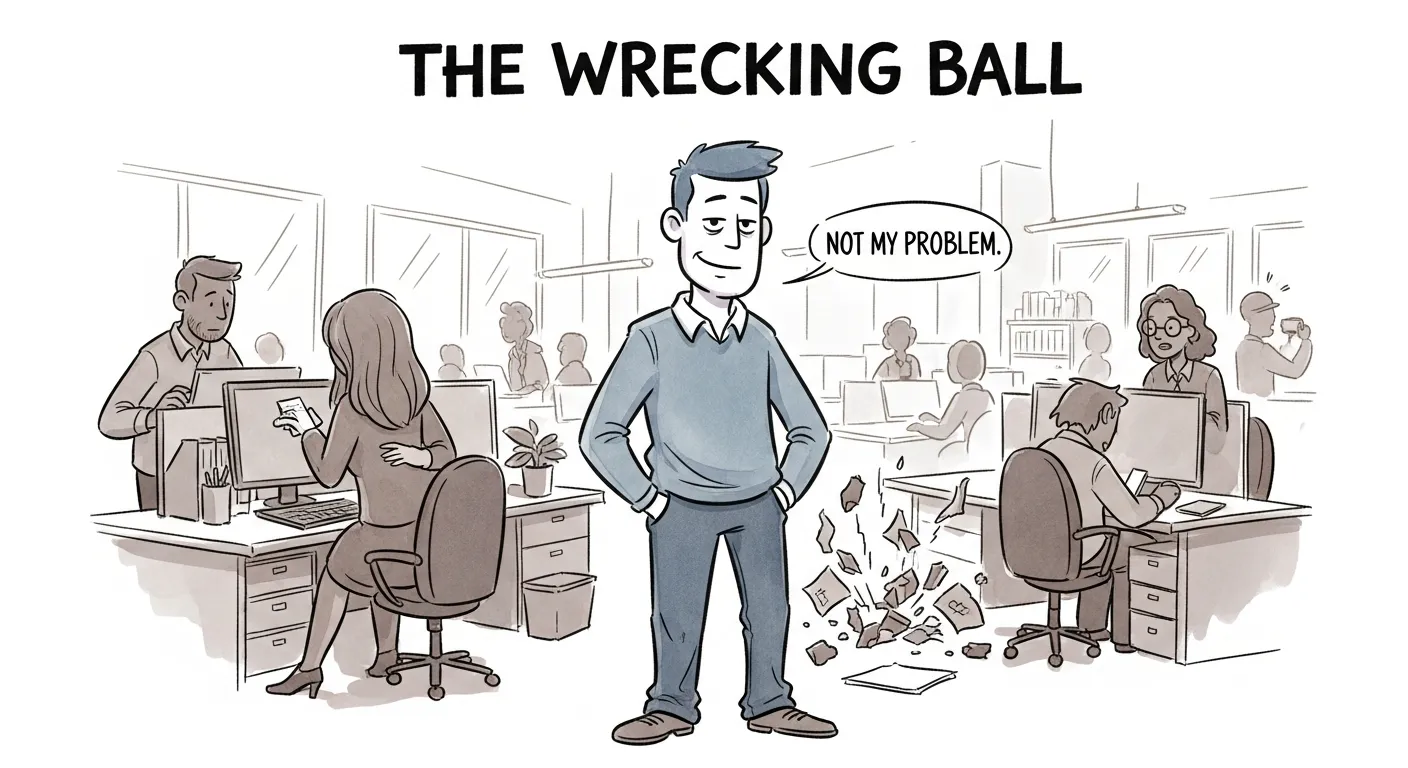
The Wrecking Ball at Work
Embracing Your Shadow Side in the Workplace
If you identify as The Wrecking Ball, your working style is an exquisite mix of Loner, Boring, Robotic, and Sloppy tendencies—congratulations on your unique talent for turning any productive environment into a cautionary tale. You naturally isolate yourself, reveling in solitude not for peace of mind but because you’ve inevitably annoyed everyone around you. Your “boring” outlook means you avoid new ideas like the plague, preferring to cling to the dry, uninspired routines that guarantee stagnation.
Your robotic approach drains any life from collaboration, responding to human emotion with all the warmth of an outdated machine stuck in a loop of monotony. Meanwhile, your sloppiness ensures deadlines are merely optional suggestions, and details are lost in a fog of procrastination. Together, these traits make you the perfect candidate to be overlooked, misunderstood, and quietly resented by coworkers who know they’ll have to double-check everything you do.
Accepting these glimpses of your true self is the first step in seeing your role for what it is: the office’s unintentional destroyer of morale. Rather than fight this fate, lean into your shadow side and embrace the chaos you bring—because, honestly, no one else will wholeheartedly tolerate it for long. Your true gift might lie in showing everyone how not to work effectively.
Awareness of these tendencies can improve your professional relationships.
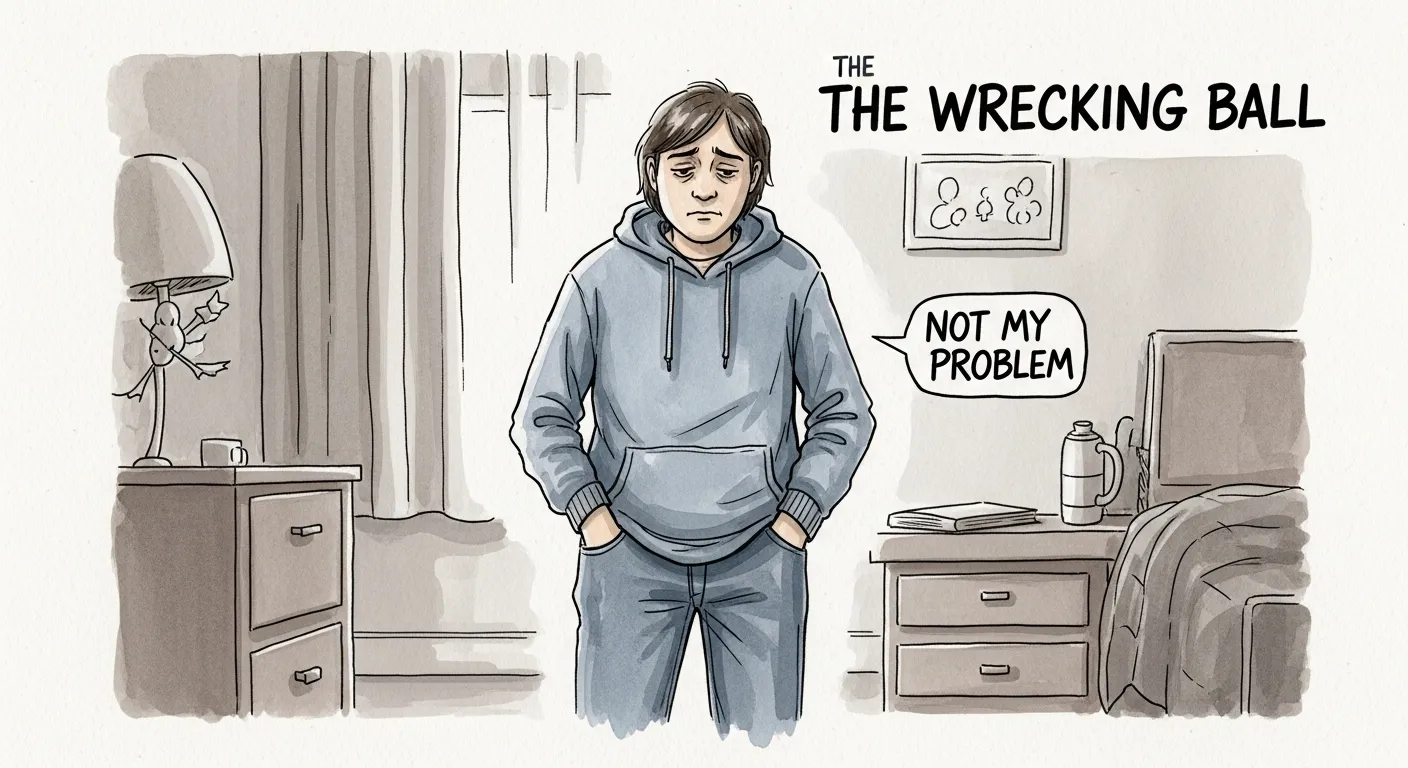
Conclusion
Few personality types are as reliably dysfunctional as the Wrecking Ball. Defined by their blend of Loner, Boring, Robotic, and Sloppy traits, these souls are wired for chaos, frustration, and social awkwardness rather than any practical mastery. While their compulsive overthinking paired with a stubborn need to control (or spectacularly fail at it) might occasionally yield surprising outcomes, most of their so-called problem-solving ends up causing more headaches for themselves and those unfortunate enough to be nearby.
But don’t get too hopeful—this type’s fascination with misery and narcissistic self-absorption as a secondary habit guarantees plenty of internal conflict and external disappointment. Whether it’s ruining relationships through baffling emotional detachment, stumbling career attempts due to sloppy planning, or simply failing to care enough to prepare for anything, Wrecking Balls excel at self-sabotage. To barely function in society, you must make a painful, conscious effort to claw your way out of your predictable pitfalls.
What you’ve just endured is merely the surface of the wreckage that is your personality type. You might have thought, “This is brutally accurate, why can’t I be normal?” or “At last, someone sees the hot mess I really am.” You may even have wondered how a cold, unfeeling algorithm can know you better than yourself—or your therapist.
There’s no trick here. You feel painfully understood because these flaws are part of your core. We’ve drowned in the despair, confusion, and awkwardness that define the Wrecking Ball, studying exactly how you trip over yourself and what faintest hope you might cling to. We did no spying, just a lot of witness testimony from other failures like you.
Still, if you entertain the faintest hope of improvement, you’ll need a plan—one that isn’t just vague self-help platitudes. Even the shiniest crash test dummy isn’t worth much without a destination. We’ve outlined your usual disastrous behaviors and your glaring weaknesses. Now, it’s time to grimly investigate the “why” behind your maladaptive wiring. Why can’t you keep a partner? How do you manage to underperform even on the simplest tasks? What horrors lurk in your unambitious dreams?
This bitter knowledge marks only the start of a lifelong struggle against your own nature. Are you brave enough to confront what drags you down? To stare at your compounding insecurities and narcissistic indulgences, to weep at what could have been, and possibly take tiny steps toward not making everything worse?
Our Premium Wrecking Ball Suite offers a dimly lit roadmap toward something vaguely resembling growth. It’s not a magic fix, or a guarantee you’ll stop being a wreck, but it’s something. Of course, it’s only for those rare souls willing to endure the pain of honest self-reflection and to dare a furtive hope of change rather than wallowing in the glorious comfort of self-defeat. If you can muster that, we’re here—and mildly pessimistic about your odds.
Self-acceptance begins with honest self-reflection. Your shadow side is not your enemy - it's simply another part of your human experience worth understanding and integrating.