The Control Freak
LORC
(aka INTJ)
Loner • Overthinker • Robotic • Controlling
Quietly manipulating every detail while pretending you're not. Your plans have plans, and contingencies for those too.

Explore This Type

Introduction
Who is the Control Freak personality type?
LORC (Control Freak) is a personality type defined by being a Loner rather than Annoying, an Overthinker rather than Boring, Robotic rather than Whiny, and Controlling rather than Sloppy. These perfectionist micromanagers cling obsessively to controlling every detail, desperately trying to impose order on the chaos of life.
Their internal world is a labyrinth of frustrations and brooding thoughts. They would call it "strategic thinking." Everyone else calls it exhausting.
"Control is an illusion. But they cling to it anyway."
People identified as Control Freaks have an insatiable hunger—not for knowledge, but for control—trying to bend reality to their iron will. Wrapped in pseudo-rationality and cold logic, they pride themselves on being smarter than everyone else. Yet they routinely sabotage their own relationships and happiness through rigid thinking and suffocating behaviors.
Their minds never rest, endlessly scrutinizing and correcting, leaving little room for empathy or joy. Finding others who appreciate their relentless need to dominate the environment is rare. When they do, it's usually mutual exhaustion disguised as "intellectual connection."
A Pioneering Spirit of Failure
Control Freaks relentlessly question everything, but only to prove themselves right. They refuse to trust conventional wisdom or others' expertise—not out of curiosity, but out of paranoia. Rules are made to be enforced, and deviation met with harsh judgment.
Success, to the Control Freak, is total dominance over their surroundings. They apply overwhelming force of will with a single-minded fixation that alienates everyone around them. Anyone who offers constructive criticism is met with cold dismissal or quiet retaliation.
They desperately want independence but often mistake it for isolation. Collaboration is too messy, too unpredictable—better to operate alone and accept responsibility for everything. This frequently crosses the line into insensitivity, trampling others' feelings without quite noticing.
Beneath the hard exterior lies a deep well of emotional turmoil—which they refuse to acknowledge. Whenever things fall apart, Control Freaks spiral into self-blame or bitterness, endlessly analyzing failures without ever quite learning from them.
An Exhausting Quest for Power
Control Freaks oscillate between delusions of grandeur and crushing pessimism. They believe sheer force of will and intellect can conquer anything, yet curse humanity for being hopelessly incompetent.
They derive their fragile self-worth from their obsessive need to manage every aspect of life. What looks like arrogance is usually compensation for profound insecurity. While they might have been "studious" or "quiet" in school, their need to control everything now isolates them further.
Their relentless mental energy leaves no space for frivolity or social niceties. Any diversion from their rigid plans feels like wasted time—or a personal slight. Yet they sometimes exhibit a dry, cutting wit, usually directed outward as sarcasm. It's easier than sincerity.
Social Frustrations and Self-Imposed Isolation
Control Freaks are arguably the least warm and fuzzy among personality types. They prioritize correctness over kindness. Small talk, white lies, and social pleasantries are viewed as pointless nonsense that only wastes their precious time.
Their brutal honesty often makes them come off as rude or abrasive—even to those who try to tolerate them. As a result, they frequently wonder if social interaction is worth the headache.
Still, even Control Freaks want connection on some level. Their rigid perfectionism usually drives people away rather than pulls them closer. What they call "authenticity" tends more toward obstinacy than emotional availability.
The Desperate Chess Game of Avoiding Failure
Control Freaks are a bundle of contradictions: rigid yet insecure, sharp yet lacking self-awareness, ambitious yet chronically dissatisfied. To outsiders, their obsessive control feels like a manic chess game against the universe. The moves are often clumsy blunders disguised as masterstrokes.
They cling to strategy hoping to guarantee a win. But their emotional rigidity and self-inflicted isolation usually ensure no one truly wins—least of all themselves.
Embrace Your Dysfunction
Unlock Your True Control Freak Potential
Stop pretending that your iron grip on everything is healthy. Our Control Suite helps you accept your darkest insecurities, stop wasting energy micromanaging the uncontrollable, and maybe—just maybe—learn to tolerate imperfection.
Control Freaks You May Have Heard of
- Friedrich Nietzsche (because nihilism demands control)
- Michelle Obama (because even controlling people find success)
- Elon Musk (attempting to control multiple planets)
- Christopher Nolan (master of controlling complex stories)
- Arnold Schwarzenegger (controlling muscles and crowds)
- Colin Powell (controlling military chaos—sometimes)
- Samantha Power (control disguised as diplomacy)
- Walter White (“Heisenberg”—chemical control chaos)
- Petyr Baelish (“Littlefinger”—master manipulator extraordinaire)
- Tywin Lannister (ruthless control over family and kingdom)
- Yennefer of Vengerberg (controlling magic like no other)
- Gandalf the Grey (strategic control of wizardry)
- Professor Moriarty (control over criminal mayhem)
- Katniss Everdeen (weaponizing control in survival)
- Seven of Nine (struggling to control her Borg nature)
- Jay Gatsby (controlling illusion and social status)
If you see yourself in this list, you're in distinguished company. Whether that's comforting or concerning is up to you.

Strengths & Weaknesses
The Control Freak Strengths
- Methodical to a Fault – If obsession over details were a sport, you'd be a gold medalist. You're wired to micromanage everything, believing every catastrophe can be averted if only you maintain your stranglehold on chaos. It rarely works, but at least you tried harder than everyone else.
- Relentlessly Stubborn – When you've decided your "right way," you bulldoze ahead regardless of complaints or consequences. This unshakeable conviction means you avoid help or input. Why listen when you're clearly the one who knows best?
- Painfully Independent – Asking for help is a foreign concept. You prefer to tackle everything solo, even if that means carrying your failures alone. Others might just get in the way of your carefully orchestrated plans.
- Ambitious to the Point of Exhaustion – You set impossible standards that guarantee frustration and a never-ending workload. At least you'll never be accused of aiming too low.
- Hypervigilant – You pore over every minor detail as if the world is an intricate conspiracy designed to undermine your plans. This makes every interaction exhausting—but occasionally you catch something everyone else missed.
- Creatively Persistent – You think outside the box, though mostly to find new ways to point out what everyone else is doing wrong. Your ideas might be unique; your insistence on them is certainly memorable.
The Control Freak Weaknesses
- Delusions of Superiority – You are annoyingly convinced that your method is the only “rational” way. This arrogance blinds you to even the obvious truths and makes you incapable of meaningful compromise. Spoiler: your “rationality” is mostly sour stubbornness.
- Emotionally Avoidant – Attempting to understand emotions? That’s for the weak. You dismiss every feeling as “irrational nonsense,” alienating anyone who dares to express vulnerability around you. Congratulations—you’re emotionally constipated.
- Criticism as a Weapon – You hold others to absurdly high standards and then delight in pointing out their failings with surgical precision. Yet when criticized yourself (even gently), you explode or shut down like a toddler denied candy.
- Endless Battles for Control – You despise rules that don’t make sense but paradoxically impose arbitrary rules on everyone else. Your constant attempts to control surroundings often mask deep insecurity and desperation to avoid failure at all costs.
- Socially Inept – Your obsession with “correctness” and control leaves you isolated and baffled by social cues. You may have convinced yourself relationships are a distraction—or worse, a mistake. Spoiler alert: loneliness is your only loyal companion.
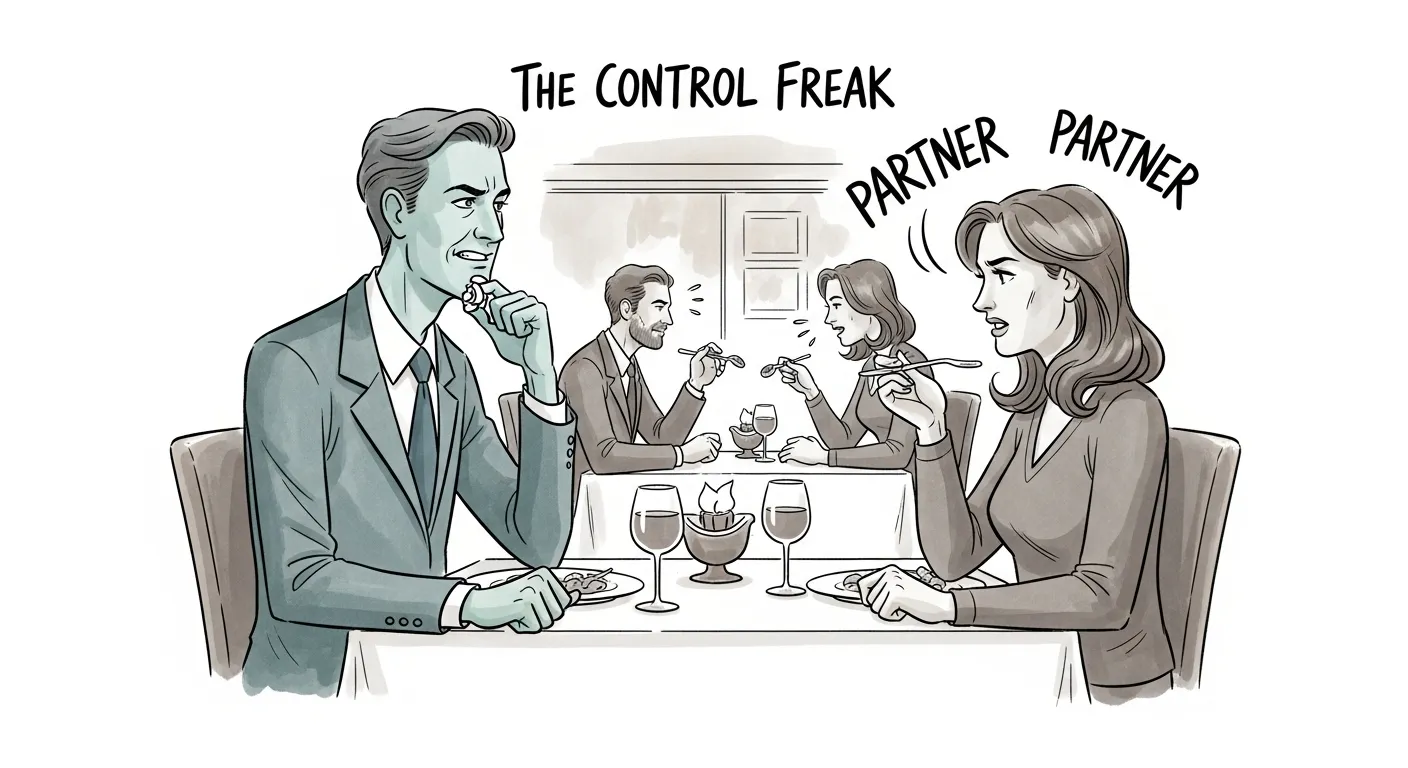
Romantic Relationships
“Of all forms of caution, caution in love is perhaps the most fatal to true happiness.”
People with the LORC personality type, also known as The Control Freaks, approach romantic relationships just as they approach most things: with a stiff grip on reality, a strict agenda, and a determination to bend everything to their will. In an imaginary world ruled purely by logic, maybe this would make them love gurus. In the real world? It just sets them up to misunderstand, misjudge, and ultimately sabotage any chance at happiness.
Finding a compatible partner for a LORC is like searching for a needle in a haystack while wearing blinders. Their unforgiving desire not only for company but for relentless intellectual domination means they often overlook anyone who might actually care. Their persistent dissatisfaction isn’t bitterness—no, it’s their special skill of imagining how everything, including their partner, should be a thousand times better. This sadly translates to a constant parade of disappointed dates and broken connections.
The Woes of Dating
If there were a guidebook on valuing depth, intelligence, and brutal honesty to the point of cruelty, you'd find it written by a LORC. They would rather spend lonely Sundays binge-watching misery than settle for anything that fails their impossibly high, ever-shifting standards. So don’t expect to lean on their social graces; they throw out all the traditional niceties of dating like yesterday’s trash, only to wonder why no one wants to play along.
Sure, their brutal honesty can be refreshing — if your idea of refreshing is being ruthlessly roasted on every first date. And yes, rules and rituals in romance often serve to cushion hearts, but LORCs refuse to take part in anything so sentimental or “irrational.” That refusal pretty much guarantees a dating life resembling a barren desert.
LORCs are quick to dismiss anything that doesn't fit their spreadsheet of compatibility and will often pride themselves on their cold detachment from the “silliness” of relationships. Reality check: this intellectual superiority complex is precisely why most of them end up single, with an inflated sense of self-importance and a collection of failed romantic experiments.
When all else fails, maybe the best advice for a LORC is to stop trying so hard. Pursuing their own obsessive interests without the constant need to control every detail might be their only shot at stumbling—accidentally—into a person who tolerates them long enough to call it "dating."
Emotion Sickness
True to their robotic tendencies, LORCs are clueless about traditional expressions of affection like flowers or heartfelt notes. They think about love endlessly—but expressing it? That’s a foreign language best avoided. When they do grudgingly commit, it is always with an underlying sense that they’re doing you a favor. Comfort zones be damned.
Long-term relationships with LORCs are sure to resemble emotional minefields. Feelings are to be analyzed, disassembled, and stored in locked compartments for future scrutiny. Any genuine show of emotion from a partner induces immediate shutdown or cold logical dissection. When they do attempt to share their own vulnerable feels, those moments are rare, awkward, and usually regretted almost instantly.
Rather than embrace the messy chaos of human emotion, LORCs cling to their intellectual armor. Learning to tolerate their partner’s feelings—and their own—often requires more patience than a saint or a therapist could muster.
Despite their emotional bankruptcy, it would be a grave mistake to assume LORCs don’t care at all; unfortunately, caring manifests as clinical detachment and cold efficiency. Love is a challenge for them, a chance to practice a skill they never mastered: being human. And if they manage to muddle through it, they might even catch a glimpse of something resembling satisfaction before retreating back into their fortress of control.
Love is hard. For LORCs, it is also humiliating, exhausting, and frequently futile—but hey, if self-awareness means facing the darkest parts of yourself, then perhaps they’ll come to accept their shadow side someday. Until then, expect a lot of tactical heartbreaks and snarky withdrawal.
Remember: recognizing these patterns is the first step toward healthier relationships.

Friendships
A friend to all is a friend to none.
Sharp-witted and mercilessly judgmental, people with the LORC personality type (The Control Freak) are rarely anyone’s cup of tea—and it’s probably best that way. They don’t waste energy chasing popularity or meaningless social niceties. Instead, they hoard their grudges and contempt for those who fail to meet their impossibly high—and frankly ridiculous—standards. If you’re lucky enough to snag their “friendship,” congratulations: you’ve passed a gauntlet filled with constant critiques and unsolicited life coaching.
LORCs might be accused of being loners, but calling them "antisocial" is an insult to antisocial behaviors everywhere. They revel in their own company, partly because it’s less exhausting than tolerating others, and partly because their fast-moving, hypercritical minds rarely leave room for warmth or understanding. Any “connection” they form is more like a strategic alliance based on intellectual dominance rather than genuine camaraderie.
An Intellectual Match
Good luck trying to get on the LORC’s friend list—spoiler alert: most don’t make it. These individuals have no patience for social pleasantries or emotional fluff, and would rather isolate themselves than endure trivial or irritating small talk. They operate with an inflexible checklist for what qualifies as “worthy” company, which they ruthlessly apply, eliminating anyone who fails to measure up.
LORCs demand depth and intensity—though what they actually deliver is seriousness and awkwardness. They prefer a meticulously curated “few” who constantly feel inadequate rather than a community, because spreading their attention around would only highlight their social ineptitude.
On the rare occasions they extend themselves beyond their usual circle, it’s less an act of kindness and more a reluctant acknowledgment that even LORCs need victims—er, friends—who can match their unrelenting need for debate and nitpicking. Popularity means nothing; what matters is that potential “friends” pose a challenge to their fragile ego or endlessly entertain their masochistic need to “fix” others.
In friendship, LORCs mandate mental sparring above all else, eagerly hunting for conversational prey who can expose flaws in their arguments or provide ammunition to reinforce their grandiose self-image.
A Unique Friendship
Even in friendship, control is king. The LORC prizes autonomy so fiercely that social obligations feel like shackles. They want their friends to be utterly dependent on their guidance, while maintaining the illusion that they themselves tolerate these interactions out of sheer benevolence rather than necessity.
LORCs are fiercely loyal on their own terms, which usually means micromanaging every detail of a friend’s life under the guise of “helping.” Prepare for cold logic, unsolicited advice, and solutions that fit their need for control—not your actual feelings. Emotional support is often sidelined as a “waste of time” compared to their beloved strategy sessions.
Even their closest relationships can feel like high-stakes negotiations or sessions with an overbearing coach. When emotions do get involved, don’t expect comfort: instead, brace yourself for awkward silence or brusque dismissal. LORCs tend to be utterly out of their depth when empathy is required, resorting instead to clinical detachment or sarcasm that dulls any chance of genuine connection.
The upside? Among those very few who stick around, LORCs eventually drop their relentless pretense. Their sarcasm becomes a grim brand of humor, and their insight—if barely tolerable—is freely shared. But for everyone else, these “friendships” are a rollercoaster of guilt, correction, and existential dread masked behind a veneer of “intellectual companionship.”

Parenthood
Children must be taught how to tolerate the unbearable, not how to enjoy it.
People with the LORC personality type (The Control Freak) approach parenting with all the warmth of a spreadsheet and the emotional range of a malfunctioning robot. Children, who naturally flail about in confusion and chaos, are baffling to them—why can't kids just follow an itinerary? Parenting for the LORC is less about bonding and more about imposing microscopic order on the inevitable mayhem of childhood. Mastering patience is naturally off the table; instead, rigid control and relentless self-discipline are the motto.
As parents, LORCs see themselves as commanders, not nurturers. Their mission: marshal intellect, enforce discipline with an iron fist, and crush any hint of childish curiosity that doesn’t fit the approved agenda. Children are mini projects to be optimized rather than beings to be cherished or, heaven forbid, emotionally supported.
An Honest Disconnection
LORCs want their children to become perfectly competent automatons: self-reliant to a fault, with a strict adherence to logic and an obsessive focus on facts. They don’t tolerate unruly emotions or “pointless” freedoms—any chance for independence must come wrapped in strict rules and controlled variables. Do they care if they come off as cold and unyielding? Not in the slightest. Their approach is “tough love,” which usually means tough on love.
Children under LORC supervision quickly learn that “being honest” means “being brutally blunt,” often to the point of crushing spirits. Sheltering children from harsh truths isn’t just unthinkable, it’s irresponsible. If you’re not ready for the cold, hard facts, that’s your problem, kid. Of course, these parents’re usually terrible judges of emotional readiness—because emotions are an annoying outlier they’d rather ignore.
The Emotional Desert
Displays of affection? Approval? Warm fuzzies? LORCs consider these emotional indulgences a waste of time. Their love is expressed in efficiency and discipline, which, unsurprisingly, children interpret as neglect. Those cuddles and reassurances your child desperately needs in the first years of life? Forget it. They’ll get a checklist and a stern look instead.
Offering emotional support is a foreign concept for the LORC. Emotions aren’t to be explored or validated—they’re to be subdued, categorized, and, ultimately, dismissed. Expecting children to “manage their feelings” as stoically as their parents only ensures a future generation of anxious, repressed individuals. Sometimes the best a LORC can do is awkwardly sit nearby, silently wishing their child would stop crying so they can get back to the schedule.
Setting Up for Failure
LORC parents are determined to prepare their kids for life by relentlessly pointing out every possible failure in advance and micromanaging every single outcome. They frame all hardship as a logic puzzle to be solved, rather than a complex, emotional experience to be endured. The result? Children learn to mistrust their instincts and increasingly doubt their own judgment because there’s always a hypercritical parent nearby highlighting their flaws.
The dream for a LORC is to raise a flawless, conflict-free adult who flawlessly executes life’s instructions without whining or deviation. They know that shielding kids from turmoil is impossible, so the plan is to drill in control and self-discipline so thoroughly that any deviation feels like a personal failing. Spoiler: most kids interpret this approach as a lifetime sentence of emotional exile.
Embrace your shadow side by accepting — at least grudgingly — that nobody’s perfect, especially not you. The Control Freak’s parenting style might just be the blueprint for nurturing neurotic dysfunction... but hey, you wanted realistic self-awareness, didn’t you?
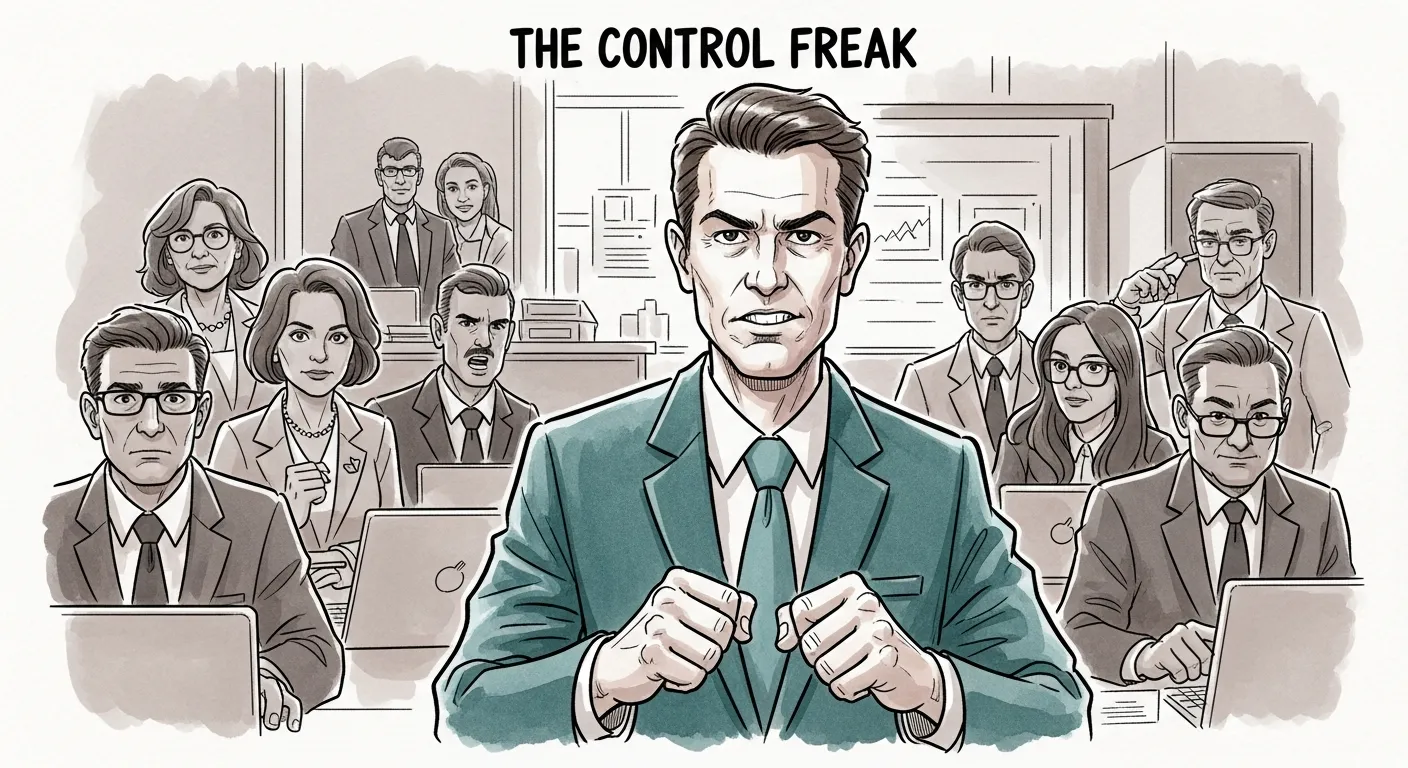
Career Paths of the Control Freak (LORC)
One never appreciates what has been accomplished; one obsessively fixates on the endless mess left behind, and if the work doesn’t crush your spirit, you’re probably not trying hard enough.
If there’s one thing true about the Control Freak, it’s that jobs that are “too easy” might as well not exist. They crave challenges only to find endless reasons to complain about them. Their insatiable desire to control every minute detail turns workplaces into battlegrounds of micro-management and misery. If a job description sounds intimidating to a sane person, it’s probably a playground for a Control Freak to unravel in self-sabotage.
Within any organization, Control Freaks are notorious for their stifling “competence” that kills morale faster than a corporate email thread. Beware, for their devotion to inefficiency disguised as “improvement” will make your life a nightmare.
The Early-Career Blues
Starting at the bottom is a punishment, not an opportunity, for the Control Freak. Forced to endure mundane, soul-numbing tasks, they stew in bitterness while devising elaborate plans to micromanage invisible processes. Their penchant for overthinking every triviality ensures they alienate anyone who might have helped them climb the ladder. Networking and diplomacy are foreign concepts here, replaced instead by stubborn refusal to ask for help or admit fault.
After years of cultivating grudges and marking off every slight, some Control Freaks develop an impressive ability to bulldoze through group efforts with a mix of condescension and cold calculation. If only they learned to smother their contempt for colleagues, they might inch upward—but rest assured, they will never lose the special knack for alienating allies and perpetuating chaos.
Control Freaks don’t just do their jobs—they obsessively critique every imperfection, depressing and demoralizing everyone involved while deluding themselves that they’re making things better.
Finding Their Place
Where other folks seek collaboration and companionship, Control Freaks demand solitude—or at the very least, an environment where their iron-fisted control won’t be questioned. Their belief that “if you want something done right, do it yourself” is really a refusal to trust anyone else with a task, dooming them to exhausting, inefficient solos or depressing group drama.
This personality type values sheer stubbornness, superiority, and total command—and disparages anyone who dares get ahead by appealing to people rather than clinging to rigid, archaic “merit.” Their workplace philosophy boils down to brutal cold logic smeared with endless critiques and passive-aggressive judgments.
Every single decision is an agonizing calculus that results mostly in analysis paralysis and perpetual dissatisfaction.
Ever Greater Challenges
Control Freaks are endlessly hungry for more power (and headaches). They will seek roles with titles that sound impressive but really just magnify their capacity to make life worse for everyone else. Their favorite playgrounds are the low-profile but toxic corners of companies: project managers who micromanage to death, systems engineers who refuse to help, strategy gurus who conjure convoluted plans that never get actioned.
They’re “creative” only in how efficiently they discover new ways to overthink simple tasks into catastrophic undertakings. Engineering, research, and technical fields are common traps where their obsession with details wrecks collaboration and progress. Artistic or experimental fields are equally doomed, as their refusal to accept feedback rioters any chance at success.
Their relentless quest to uncover hidden flaws is less a gift and more a guarantee of lifelong dissatisfaction and interpersonal disasters.
Control Freaks will insist that their painstaking combination of cold logic and relentless micromanagement constitutes their secret weapon. In reality, it’s the grease that sands down their chances of happiness and fulfilling work.
They can technically apply their “skills” anywhere—from retail aisles (where they agonize over every shelf arrangement) to sales offices (where their venomous critiques kill motivation). Social roles, if only they dared, might soften their edges, but this personality type rarely ventures there voluntarily.
Obsessive, controlling, and wired for misery, the Control Freak’s priority is ensuring that whatever miserable position they hold, it utterly squashes any inkling of joy or uncomplicated success.
Understanding your career patterns can help you make more conscious choices.
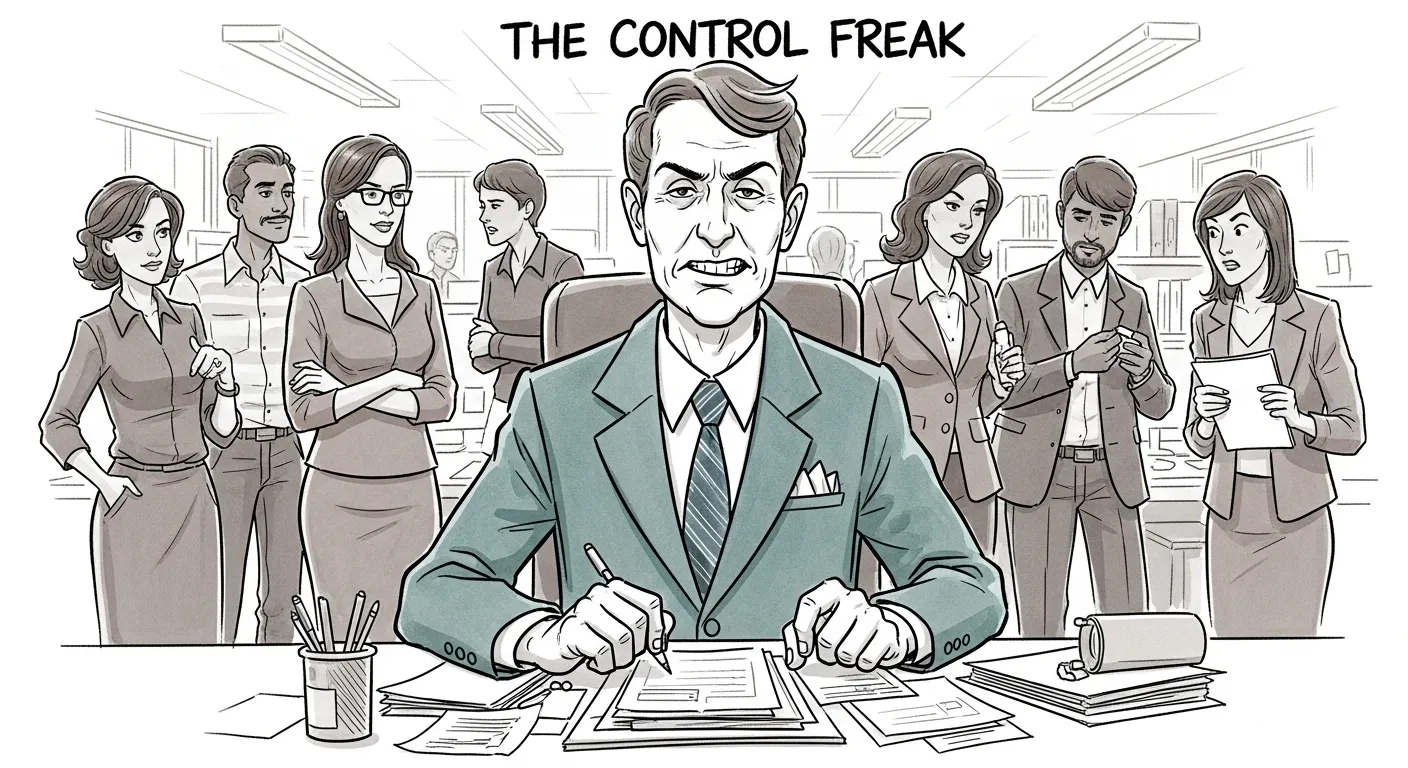
The Control Freak at Work
When it comes to the workplace, the Control Freak is an absolute nightmare—for themselves and everyone unfortunate enough to be around them. Obsessed with controlling every minute detail, they waste more energy micromanaging trivial tasks than actually getting anything done. Their Loner streak means they prefer to do everything alone, which only amplifies their inefficiency and isolation.
They notoriously fail to collaborate effectively because they see any input as a threat to their tight grip on the situation. Overthinking every scenario paralyzes decision-making, leaving projects stuck in an endless loop of "what-ifs." Their robotic insistence on sticking to their rigid plans makes them blind to simpler or more creative solutions. And when things inevitably go wrong—because they always do—their whiny tendencies ensure the entire office hears about it, repeatedly.
With their controlling nature, these people are convinced they’re the only ones who know what’s best, but in reality, they’re just blocking progress and demoralizing those around them. At their core, the Control Freak is a miserable narcissist—constantly self-absorbed in their grand designs and crushing disappointment when reality refuses to obey. They should probably just accept that their workplace kingdom is, and always will be, a chaotic mess best avoided by everyone.
Understanding and accepting this particular shadow side is crucial. Only by acknowledging the many reasons you’re professionally doomed can you begin the slow, painful process of accepting your true self—and why nobody asked for your control in the first place.
Awareness of these tendencies can improve your professional relationships.
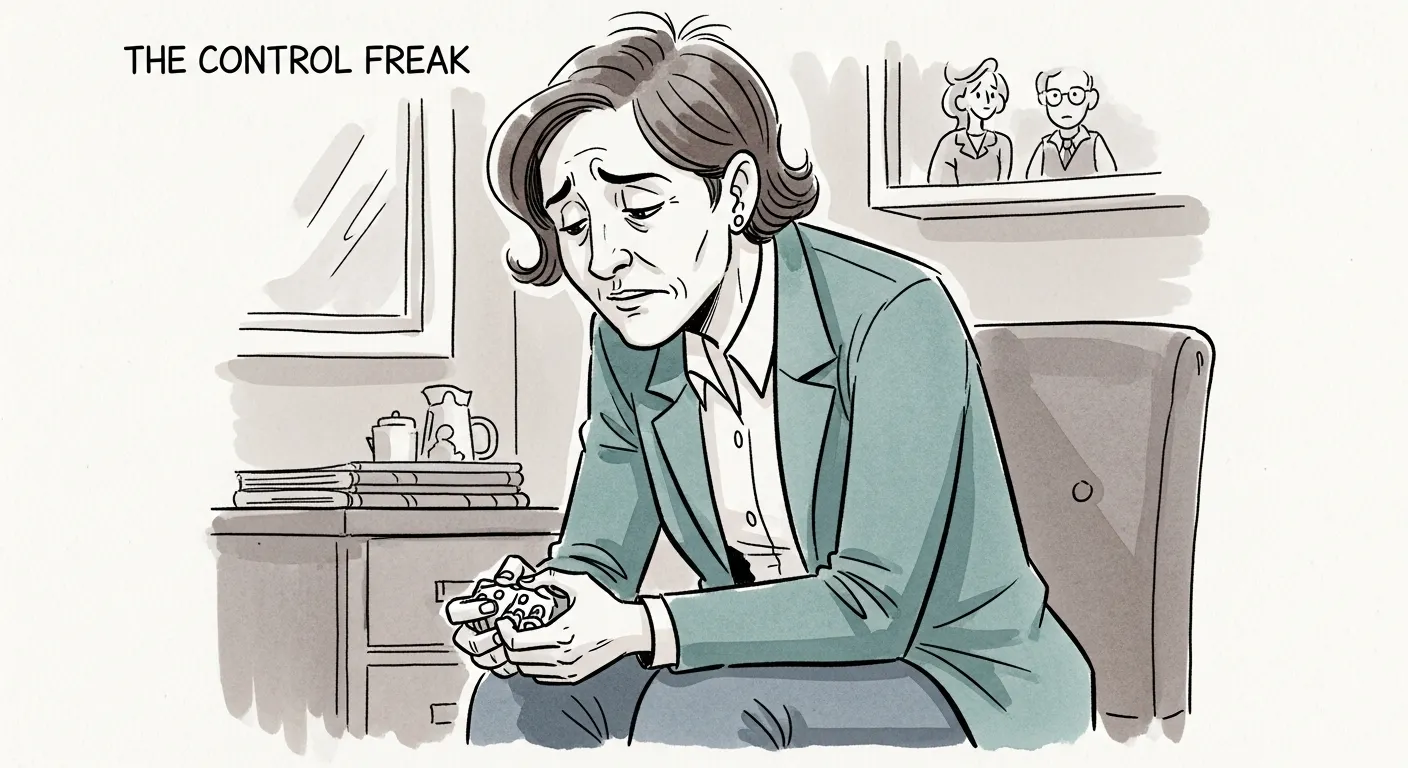
Conclusion
Armed with an exhausting urge to control every little detail and an inflexible mindset, people with the LORC personality type (The Control Freak) possess the unique ability to micromanage themselves—and everyone around them—into a state of complete misery. These so-called strengths, when misapplied (which is always), become glaring weaknesses that guarantee an underwhelming existence.
Your misunderstandings end here because, frankly, no one else can stand trying to explain it to you anymore. What you’ve skimmed through so far is just a hint—a feeble introduction to the tangled mess that is your personality.
The Path of Discovery
Reading through this profile, you’ve probably experienced a familiar progression: from your usual annoying insistence that you’re always right to mild confusion (“Huh…”) to a cold realization of just how much you alienate everyone around you (“Wait, what?”). You might even be feeling slightly unsettled, perhaps for the first time noticing someone else actually understands your toxic patterns.
Maybe you’ve settled into this controlling, miserable persona and even begun to take pride in the chaos it creates. But clutching that bitter identity doesn’t have to be your destiny. It’s a defense mechanism—one that erects walls between you and the world, creating a lonely labyrinth of inefficiency and frustration. Understanding your shadow side and learning to accept all parts of you might be harder than clinging to control, but the alternative is stagnation.
Here at 16Insecurities, we’ve slogged through endless data on the LORC type’s habits and hideous tendencies. Piece by piece, story by story, we’ve uncovered what distinguishes the miserable souls crushed by self-importance from those who at least pretend to make it through the day. We appreciate the unique misery that your personality brings—and, more importantly, how facing those dark corners could maybe, just maybe, offer a flicker of relief.
Our painfully honest, brutally accurate guidance for The Control Freak can help you see where your controlling nature trips you up—while desperately hoping you might learn to tolerate the messiness of being human. Because isn’t that what you want deep down? To acknowledge your flaws and stop driving everyone away before it’s too late?
If you’re ready—against all odds—to start this awkward, humiliating journey of self-discovery, go ahead. Read on.
Self-acceptance begins with honest self-reflection. Your shadow side is not your enemy - it's simply another part of your human experience worth understanding and integrating.
Shadow Insight
"Your perfectionism is a shield. If everything is exactly right, nothing can hurt you—or so you hope."
Stay Updated on Your Type
Subscribe to get regular updates and insights about your type.